Guide · 17 August 2026 · by Zafer
Vegetable-tanned vs chrome-tanned: what the tannage decides
One takes months, tree bark and patience. The other takes a day, chromium salts and a rotating drum. Both make real leather — and they age in opposite directions.
Tanning is the step nobody sees and everybody feels. It’s what turns a perishable skin into a permanent material — and how it’s done decides almost everything you’ll experience over the next decade: the smell, the weight in your hand, whether scratches heal or accumulate, whether the colour deepens or fades, whether the object ages in or wears out. In the four decisions that decide quality, this is decision number two. It deserves its own article.
What tanning actually is
Raw hide is skin, and skin rots. Tanning binds the collagen fibres so they can never return to being food for bacteria — the difference between a material that lasts thirty years and one that wouldn’t last thirty days. Humanity has known two main ways to do it: slowly, with plants; or quickly, with minerals. Neither is fake. But they produce materials with entirely different temperaments.
Two roads out of the tannery
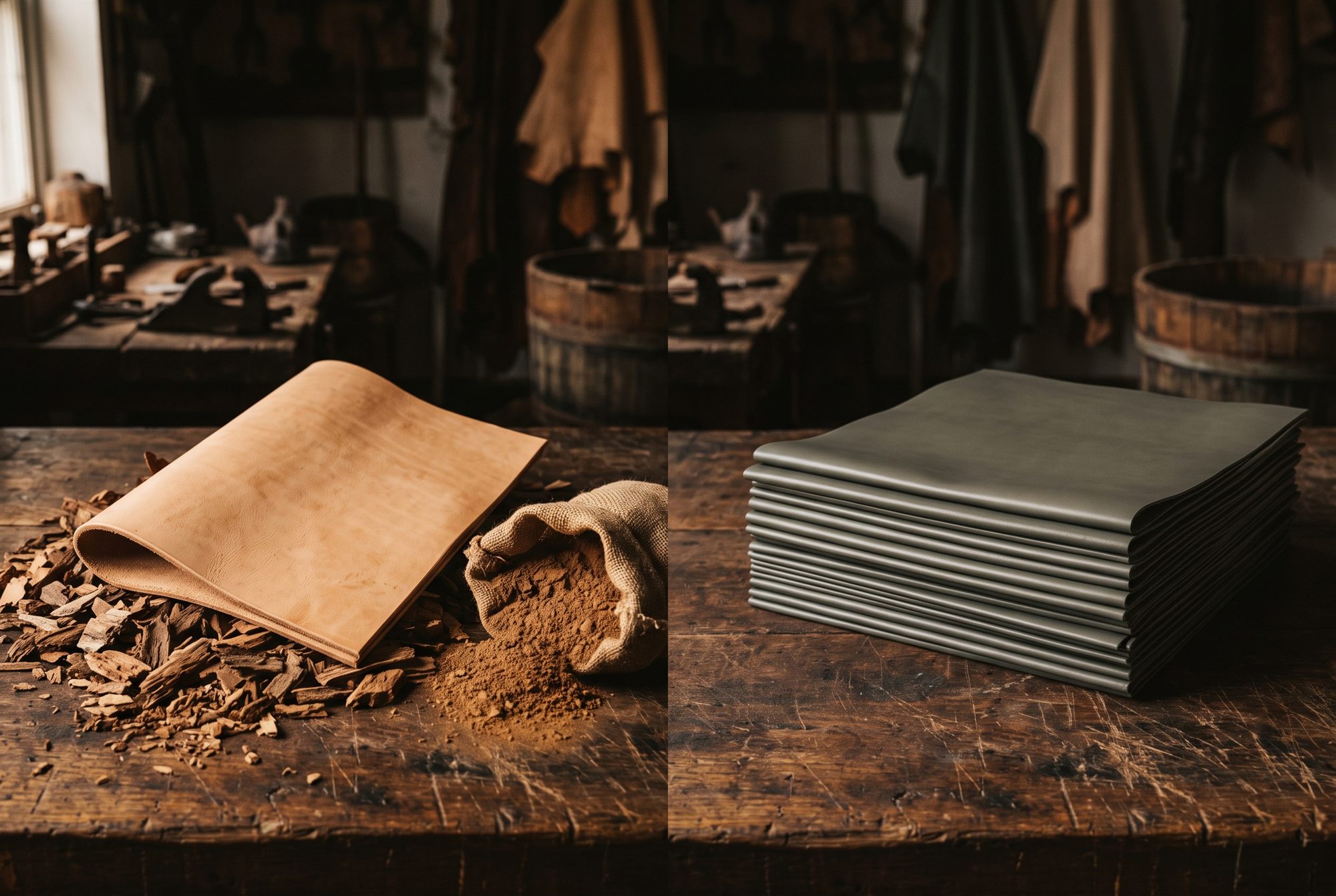
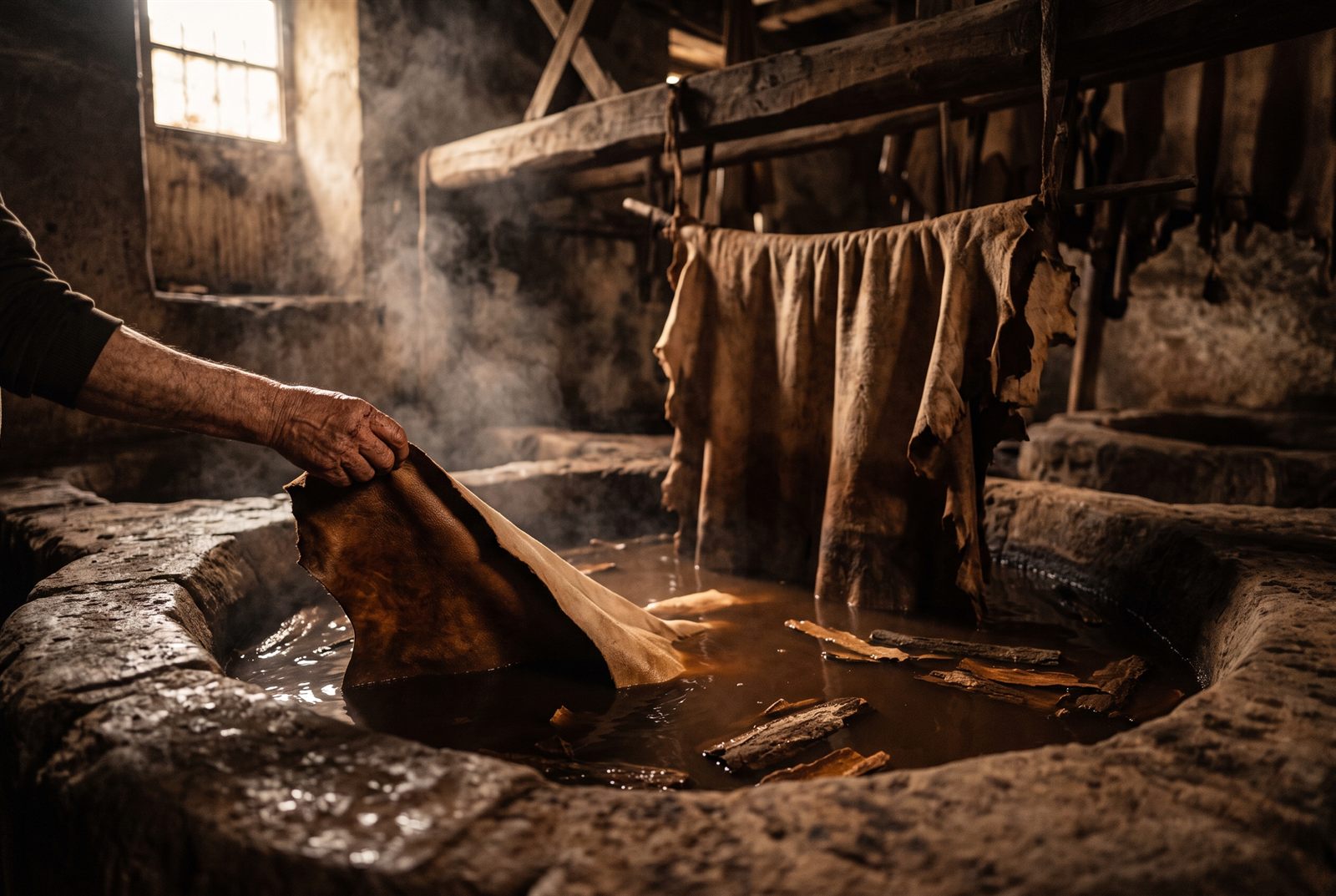
Vegetable tanning is the ancient method: hides soak in pits of water and ground tree bark — oak, mimosa, chestnut — moving from weak tannin baths to strong ones over weeks. The tannins bind slowly and deeply, and they bring their plant character with them: the warm, woody smell everyone associates with “real leather,” the firm body, the ability to be carved, stamped and burnished, and above all the ability to change — sun, hands and time keep working on a veg-tanned hide forever.
Chrome tanning, invented in the 1850s, replaces bark with chromium salts and pits with rotating drums. It’s a marvel of efficiency: done in about a day, it yields leather that’s immediately soft, takes any dye colour uniformly, shrugs off water and heat, and costs a fraction as much. That’s why roughly nine out of ten leathers on Earth are chrome-tanned — your car seats, your jacket, most of your shoes.
What each choice does to the object
Here’s the honest ledger. Veg-tan ages in: it darkens where hands touch it, mellows in sunlight, and its scratches blend into patina — the material compounds, like a good answer to time. It also biodegrades at end of life. Its costs: it starts stiffer, wants a break-in period, spots if water sits on it (the fix is in our restoration guide), and it simply costs more, because sixty days of tannery time is sixty days.
Chrome-tan ages out: it looks its best on day one and defends that look as long as it can. It won’t darken, won’t deepen, won’t record your years — and when its surface finally wears, there’s no character underneath, just tiredness. Its gifts are real: softness, colour freedom, water resistance, price. And its environmental story is genuinely mixed — well-managed tanneries recycle their chromium safely; badly managed ones are a river’s nightmare. The label never tells you which one you got.
Chrome tanning asks: what colour do you want today? Vegetable tanning asks: what story do you want in ten years?
How to tell them apart in the shop
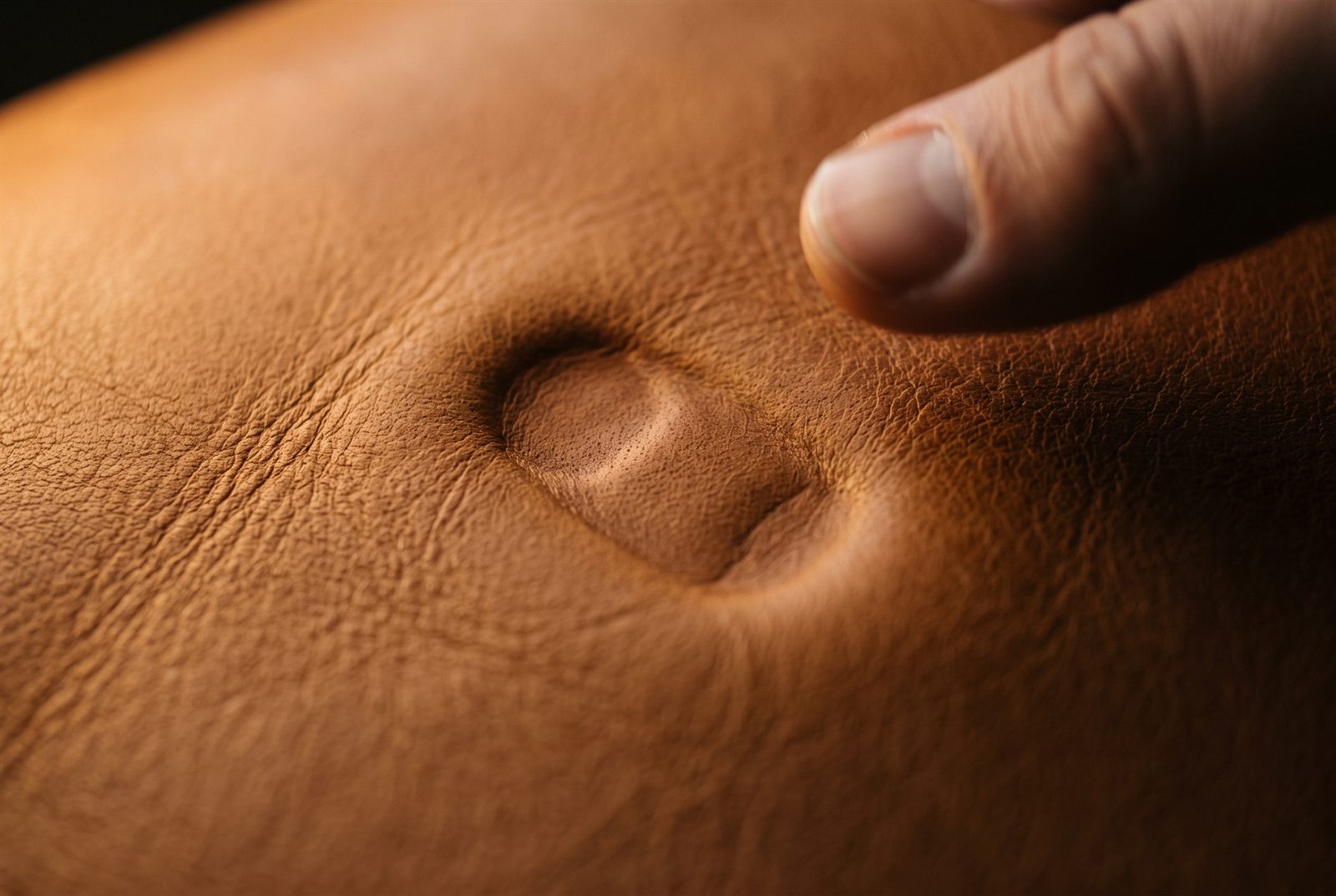
No lab needed — four senses and a minute:
Is chrome-tanned leather “bad,” then?
No — and we’d rather be honest than tribal about this. A soft chrome-tanned lambskin jacket is the right material for a jacket; nobody wants a garment with a sixty-day opinion of its own. Chrome earned its nine-in-ten share by being genuinely good at softness, colour and cost. The mismatch happens when chrome leather is sold with the promises of veg-tan — heirloom, patina, buy-once — that its chemistry cannot keep. The tannage should match the object’s job. For bags, wallets, belts and anything meant to outlive its receipt, that job is aging well, and aging well is vegetable tanning’s entire specialty.
The combination middle ground
You’ll also meet combination tanning (or “retan”): a quick chrome base finished with vegetable tannins. It borrows some softness from one parent and some character from the other, and much of the world’s better shoe leather lives here. It’s a legitimate craft choice — just ask which side of the family dominates, because the aging behaviour follows the dominant parent.
Why we only stock the slow shelf
Every hide in our atelier is full-grain and vegetable-tanned. Not because chrome is a sin — but because everything we make is designed around one promise: it gets better as you use it. Only one tannage can keep that promise. The bark, the pits, the sixty days — that’s not nostalgia. It’s the ingredient list for patina.
Fast tanning makes leather that survives time. Slow tanning makes leather that collaborates with it.
Curious how to check the rest of a piece — the cut, the finish, the construction? Start with the grades guide, run the 60-second inspection, and if you’re ever unsure what a listing means, the Leather FAQ answers the thirty-five questions we hear most.