Guide · 11 August 2026 · by Pınar
Why “real leather” doesn’t mean good leather
The most expensive confusion in the leather aisle is a single question asked with relief: “But is it real?” Yes. It probably is. And it can still be terrible.
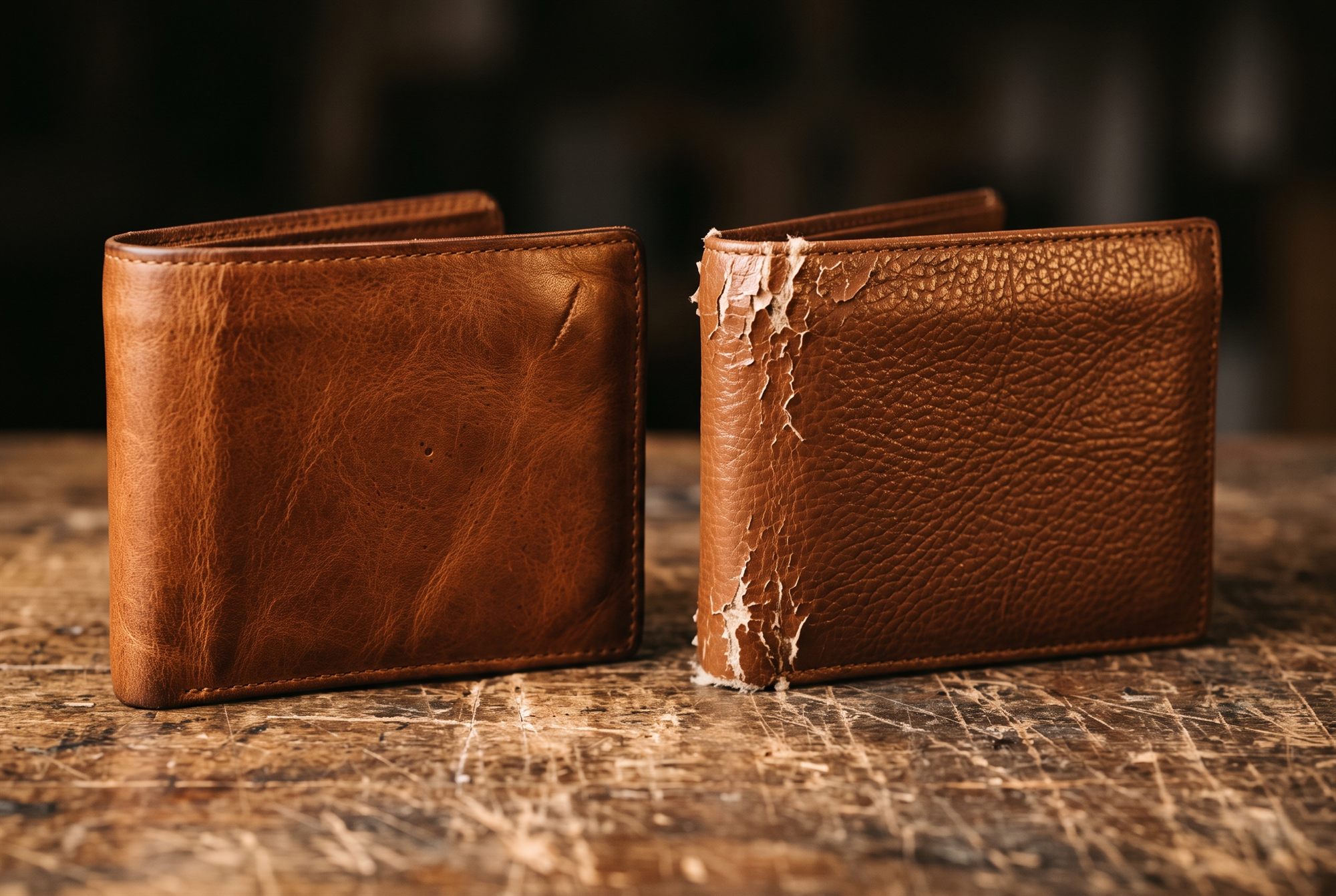
Every week someone at a fair picks up a cracked, peeling wallet they bought elsewhere and asks us how it can be broken — “it said real leather.” It did. It was. Nobody lied, exactly. And that is the whole problem with the word: real describes what something is made of, not how well it was made. Flour is real in a bad loaf, too.
“Real” is a fact about the material. Quality is a series of decisions about it.
What the label actually promises (almost nothing)
Legally, “real leather” and “genuine leather” require only that the thing contains hide. That floor is low enough to cover the weakest layers of the animal: splits — the loose, fuzzy underside of the hide, sanded flat, coated with pigment and embossed with a grain pattern it never had. It is 100% real leather in the same sense that sawdust board is 100% real wood. We’ve mapped the label ladder in detail in our grades guide; the short version is that “genuine leather” is not a compliment. It is the bottom rung introducing itself politely.
One hide, two fates
Here is the fact the label hides: the heirloom bag and the three-year disappointment can start as the same animal. What separates them is everything that happens next:
The four decisions that actually decide quality
When we assess a piece of leather — ours or anyone’s — we’re reading four decisions someone made long before the price tag:
The cut is the big one — the top of the hide, where fibres are packed dense, is structurally a different material from the loose flesh below it, even though both wear the same word. The tannage decides temperament: vegetable tanning takes months and gives leather the ability to age; fast chrome tanning gives it the ability to be cheap. The finish decides honesty: the less paint on the surface, the more the leather has to be good underneath. And the construction decides the ending — whether year six brings a repair or a replacement.
Real leather that behaves like plastic
The industry’s quiet masterpiece is corrected-grain leather: real hide whose scarred or loose surface is sanded away, rebuilt with filler and pigment, then embossed with a fake grain pattern — perfectly even, perfectly repeating. Run your finger over it and you are not touching leather; you are touching the coating. Which is why it fails like a coating: it doesn’t crease and darken with use, it cracks and flakes, usually at the fold points, usually around year three. The material was real. The surface you paid for was paint.
When coated leather cracks, nothing went wrong. The plastic part simply did what plastic does.
Why brands lean on the word
Economics, not malice. A hide split into layers yields two or three times the sellable area of a hide kept whole, and a stamped grain hides every shortcut underneath it. The word real then does the marketing for free, because most buyers have been taught exactly one question — and “genuine leather” answers it while quietly describing the floor of the market, not the ceiling. The label isn’t false. It’s just answering an easier question than the one you meant to ask.
The ten-second unmasking
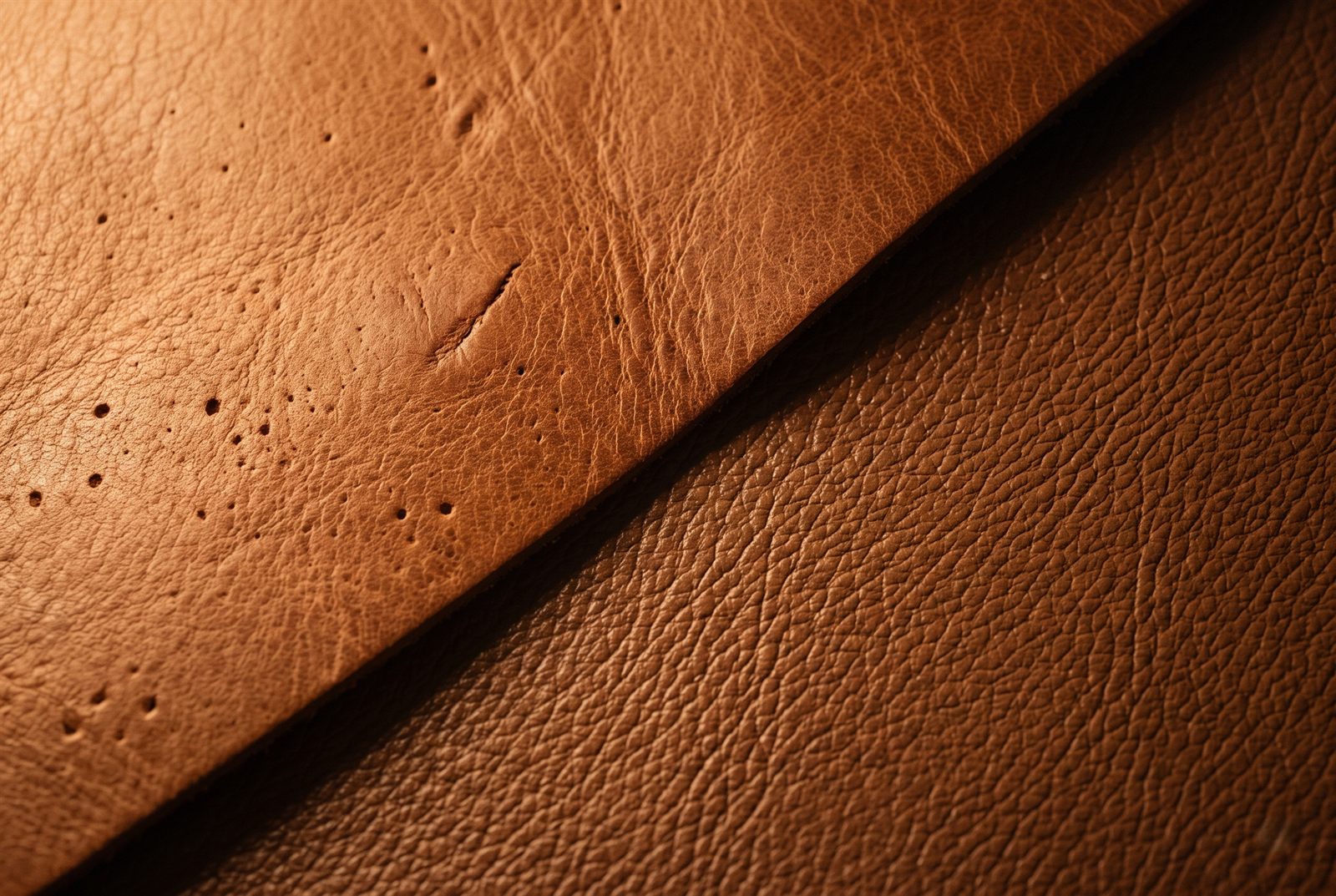
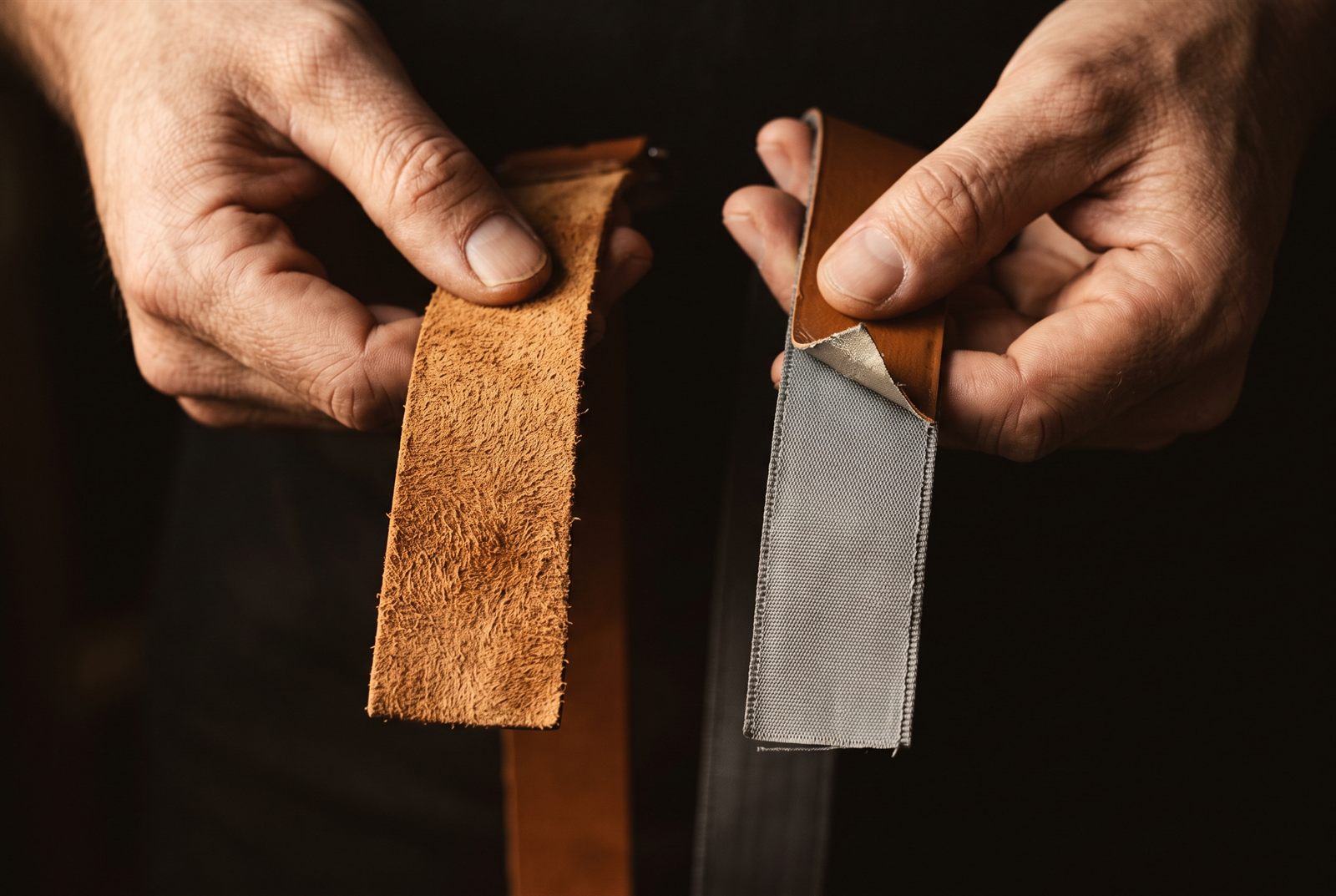
You don’t need a lab. Look at the pores: nature never repeats; a perfectly uniform grain is a stamp. Smell it: warm and woody means hide, chemical means coating. Turn it over: the underside should be fibrous suede, not fabric or foam. Check the edge: a burnished or cleanly finished edge means someone cared everywhere you can’t see. The full routine — including the fridge-magnet trick for hardware — is in our 60-second inspection guide, and the FAQ covers the questions to ask a seller.
Upgrade the question
“Is it real?” filters out vinyl and nothing else. The question that actually protects your money has four parts, and any honest maker will enjoy answering them in one breath: Which layer of the hide? What tannage? What finish? And when something fails — can it be repaired? Ask that, and you’ll never again own a wallet that cracked while telling the truth about itself.
Don’t ask whether the leather is real. Ask whether it’s honest.
Further reading
- Aniline, semi-aniline, pigmented: what a leather’s finish actually decides
- Why is my leather peeling? Real leather doesn’t — coatings do
- What is full-grain leather, really? A maker’s anatomy lesson
- Full-grain, top-grain, “genuine”: what leather labels really mean
- How to buy leather accessories: a maker’s 60-second inspection
- How long does a leather bag last? The honest numbers
- The Leather FAQ — 35 buyer questions answered