Guide · 28 July 2026 · by Zafer · updated 13 November 2026
Full-grain, top-grain, “genuine”: what leather labels really mean
Three labels, three completely different materials. A maker’s honest map of the leather aisle.
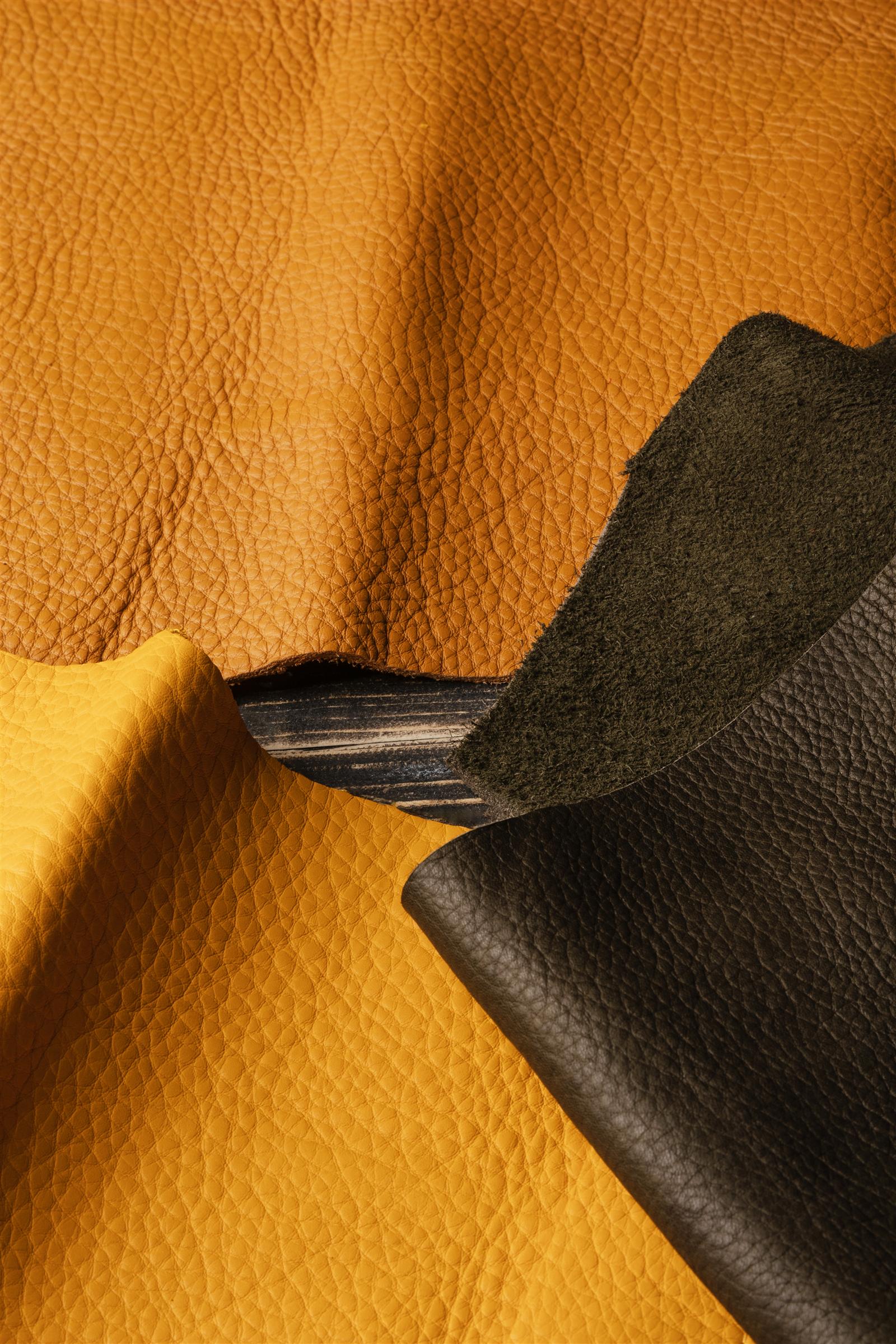
The short answer: full-grain is the intact top layer of the hide and the strongest; top-grain has had that surface sanded and refinished; “genuine leather” is real but is the lowest grade, made from the weaker layers underneath. Bonded leather is not a grade at all: it is leather dust held together with glue.
Walk into any shop and three labels compete for your trust: full-grain, top-grain, genuine leather. They sound like siblings. They are not. Here is what each one actually is, from the maker’s side of the bench.
A hide has layers
Think of a hide as a cross-section. The very top — where the animal met the world — is the grain: dense, tight fibres, scars and all. Below it the fibres loosen into the corium, soft and weak. Every leather label is really telling you which layer you’re buying.
Full-grain: the whole truth
Full-grain is the intact top layer, nothing sanded away. It is the strongest cut there is, and the only one that ages instead of wearing out: sunlight, handling and time deepen its colour into patina. Scars and insect bites stay visible — that is not a flaw, it is provenance. Everything at Paz is full-grain.
Top-grain: politely corrected
Sand off the top few tenths of a millimetre and you get top-grain: more uniform, easier to dye consistently, slightly weaker. Most luxury factory goods use it because it photographs well. It ages politely rather than beautifully — the coating that replaces the natural grain eventually wears through.
“Genuine leather”: real in name only
Here is the honest part: genuine leather is a legal description, not a compliment. It is what remains once the good layers are gone — split fibres, often glued and stamped with a fake grain, sealed under paint. It cracks where full-grain would only crease. It still passes the burn test, because it is real hide — just not good hide. If a product’s proudest claim is that its leather is genuine, read that as a warning.
Tannage matters as much as the cut
- Vegetable tanning uses oak and mimosa bark over weeks or months. It smells warm, burnishes to a shine, and develops patina. It is the slow option — and the one we choose.
- Chrome tanning takes about a day, stays soft and uniform forever, and never truly ages. Nearly all fast fashion leather is chrome.
The four-second shop test
- Smell it. Veg-tan smells of wood and honey; heavy coating smells of plastic.
- Look at the cut edge. Layered, fibrous edge = real structure. Perfectly smooth = paint.
- Look closely at the grain. Repeating identical pores = stamped pattern.
- Crease it gently. Full-grain creases fine and recovers; coated splits show a white line.
The other words on the label
- Corrected grain: top-grain that has been sanded, then embossed with an artificial grain pattern and painted. Uniform, hard-wearing on the surface, and unable to develop a patina.
- Split leather: the lower layer left when the grain is sliced off. Brushed, it becomes suede. Coated and stamped, it is usually what “genuine leather” means.
- Nubuck: the grain side, lightly sanded to a fine nap. Stronger than suede, because it is still the top of the hide.
- Bonded leather: shredded offcuts mixed with polyurethane and pressed onto a fabric backing. It peels rather than creases, and nothing brings it back.
- PU or “vegan” leather: plastic on fabric, with no hide in it. It has honest uses, and a predictable way of failing.
Is top-grain bad?
No, and it would be dishonest of us to say so. Top-grain is real, durable leather, and for a car seat or a sofa that has to resist spills and sunlight evenly for years, a corrected and coated surface is a sensible choice. What you give up is ageing: the surface you touch is a finish, not the hide, so it stays the same until the finish wears through.
The grade to be wary of is the one that hides behind a true word. “Real” says what a thing is made of, not how good it is.
Grade is not the whole story
A full-grain hide can still be made into a poor object. The grade tells you which layer you are buying. It does not tell you how the leather was tanned, how thick it is, or whether the piece was stitched, glued or riveted together. A bag in honest full-grain with plated zinc hardware and painted edges will be let down by the metal and the edges long before the leather.
Price is not a grade either. Some of the most expensive bags in the world are corrected grain under a famous name, and some modest workshop pieces are full-grain all the way through.
Quick answers
Is genuine leather real leather? Yes. It comes from an animal hide. It is simply the weakest real grade, and usually coated.
Which grade lasts longest? Full-grain, by a wide margin. The working numbers are here.
How can I tell full-grain in a shop? Look for pores that vary in size and spacing, small natural marks, and a cut edge that shows one continuous fibrous layer. Seven tests, in order.
Why do so few brands say which grade they use? Because the law in most countries only requires the word “leather”. A maker who uses full-grain will normally say so; silence is information.
Buy the material that plans to outlive the receipt. That is the whole philosophy.
Further reading
- Leather belts: why they fail at the fold, and how to buy one that outlasts its buckle
- Cowhide, lambskin or goatskin: which leather for which object
- What is nappa leather? What the word means, and what it does not
- How to tell if leather is real: seven tests, in the order that matters
- Lined or unlined: what a lining is for, and what it hides
- Fake crazy horse leather: why every real-leather test passes it
- The leather burn test: what it actually proves, and what it cannot
- Natural marks on leather: where each one came from, and which ones are actually faults
- Suede and nubuck care: why everything that feeds smooth leather ruins nap
- Aniline, semi-aniline, pigmented: what a leather’s finish actually decides
- Leather thickness: what an ounce means, and why thicker is not better
- Why is my leather peeling? Real leather doesn’t — coatings do
- What is full-grain leather, really? A maker’s anatomy lesson
- How to care for handmade leather: the complete guide
- The leather glossary — 18 terms explained