Guide · 26 August 2026 · by Zafer
Why does leather smell the way it does? (And how to fix a bad one)
Before there were grades, labels or lab tests, there was the nose. It is still the fastest leather-grading instrument in the world — and it’s standing right in the middle of your face.

Watch anyone pick up a leather bag in a shop. Before they check the stitching, before they look for a label, they lift it to their face. They’re not being sentimental — they’re running the oldest quality test there is. The smell of leather is not decoration. It’s a chemical report on how the hide was made, and it’s remarkably hard to fake.
Where the “leather smell” actually comes from
That warm, woody, faintly sweet scent everyone means by “real leather smell” is mostly the smell of vegetable tanning: plant tannins from oak, mimosa and chestnut bark, plus the natural oils and waxes worked into the hide afterwards. It’s the same family of scents as a forest floor, a wine cellar, an old library — which is why it reads as expensive before you’ve seen a price. Chrome-tanned leather smells different because the tannins aren’t there: cleaner, flatter, faintly mineral, sometimes with a whisper of the finishing chemicals. Neither is fake. But only one smells like the thing people are actually paying for.
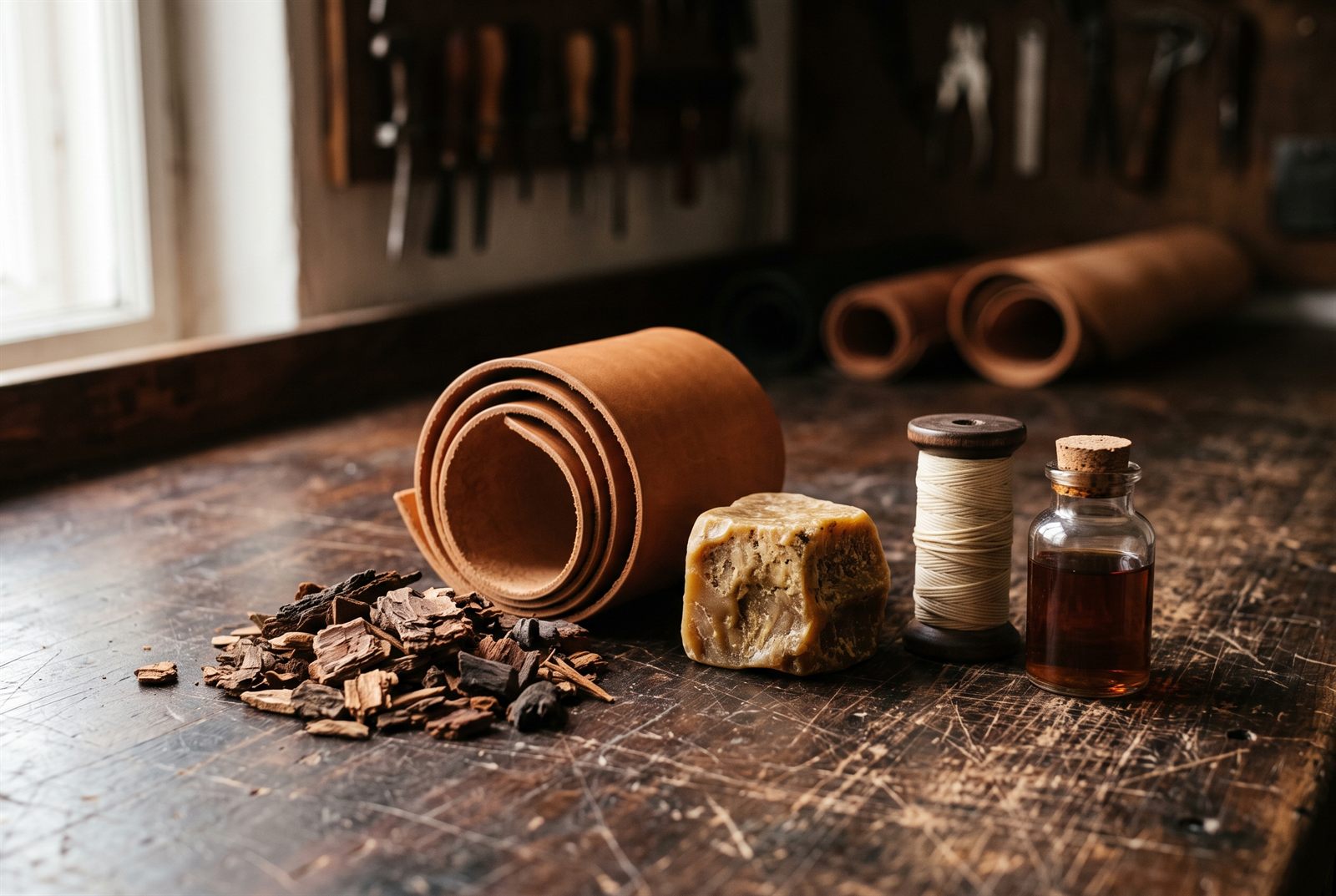
The nose is the oldest leather-grading instrument there is. It has never been fooled by a label.
Reading the smell: a field guide
The first three lines are the shop test, and they’re nearly infallible: a hide that smells of wood was tanned with wood; a hide that smells of plastic is wearing plastic. It’s the same logic we use in the 60-second inspection and the reason smell comes first in every checklist we’ve ever written. The last three lines are the ones people write to us about — because they’re the smells that arrive later.
How to get a bad smell out of leather
Full-grain leather is open-pored, which is why it absorbs smoke, perfume, damp and a previous owner’s cigarettes so readily — and, happily, why it releases them too. The principle behind every honest fix is the same: let the leather breathe, give the odour somewhere else to go, and never try to overpower it.
Two of the “never” items deserve a word. Fresheners and sprays don’t remove odour, they layer a synthetic one on top and soak the leather with solvents in the process — you end up with a bag that smells like a taxi. And the freezer trick (bagging the item and freezing it to kill smells) does nothing to odour molecules and everything to the leather: condensation on thawing puts water exactly where you don’t want it. Cold air, not frozen air.
The smell that shouldn’t be there on day one
If a new bag smells fishy, sour, or sharply chemical, that isn’t something to fix — it’s information. Fishy means cheap fish-oil fatliquors in the tannery; chemical means finishing solvents still off-gassing; both mean the hide was made fast. It may fade over weeks. But it’s worth asking yourself the question the nose already answered: if they hurried the smell, what else did they hurry? This is why we list smell first in the four decisions that decide quality — it’s the tannage confessing.
Why our atelier smells the way it does
People walk into the workshop and stop in the doorway. What they’re smelling is vegetable-tanned hide, beeswax, linen thread and the wood of the bench — nothing added, nothing sprayed. Every piece that leaves carries that smell with it for years, and it’s the first thing customers mention when the parcel opens. We didn’t design it. It’s simply what honest leather smells like when nobody has hurried it.
Good leather smells like where it came from. Bad leather smells like what was done to it.
Inherited a bag that smells of someone else’s decades? Start with a week of air before anything else — and if it’s still there, photograph it and write to info@pazleather.com. We’ve smelled every version.