Guide · 3 September 2026 · by Zafer
How to store a leather bag: dust bags, mould and the wardrobe changeover
The bags that arrive at our bench in the worst condition are almost never the ones in daily use. They are the ones that were kept safe.
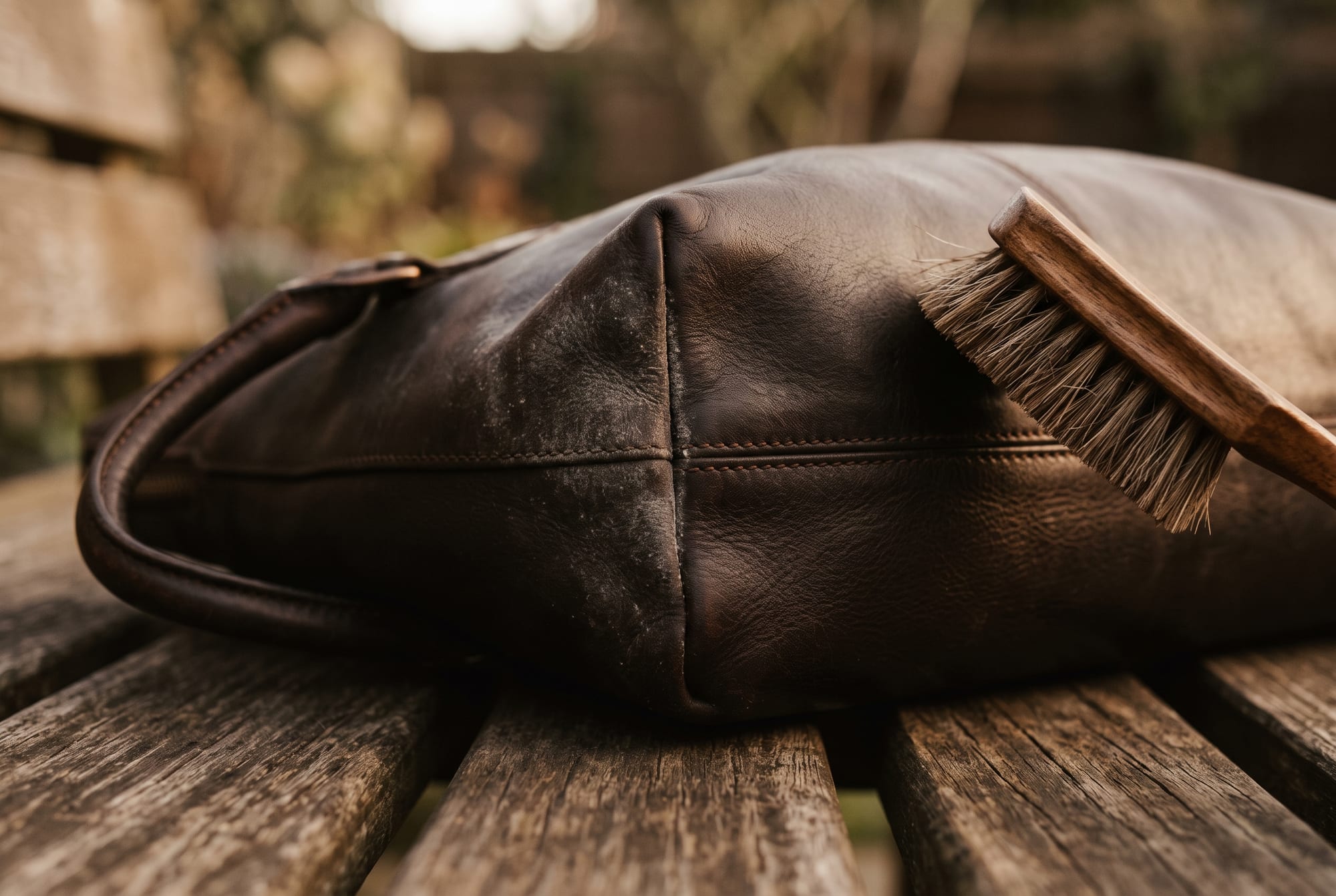
Early September is the changeover: the light summer bag goes into the cupboard and something warmer comes out. It is also the week we start getting the emails. A bag sealed away in June, opened in September, now wearing a grey-white bloom across one side and smelling of a damp cellar.
Here is the part that surprises people. A hide in daily use is being handled, aired, warmed, occasionally rained on and constantly flexed — and it survives that for decades. A hide sealed in a plastic bag in a warm cupboard is doing nothing at all, and it can be ruined in a single season. Leather does not mind being used. It minds being sealed.
Why plastic is the villain
A finished hide is never bone dry. It holds moisture in its fibre bundles and constantly exchanges it with the air — taking a little in when the room is humid, giving it back when the room is dry. That exchange is how it stays supple.
Wrap it in plastic and you interrupt the exchange without stopping the moisture. Whatever humidity was in the room when you sealed the bag is now trapped against the leather, and leather is an organic, protein-rich surface: warm, damp and organic is the exact specification mould looks for. This is why the vacuum bag — which feels like the most careful thing you could possibly do — is the most reliable way to grow mould on a good hide.
What the leather wants instead is dull and cheap: cotton, air, a stable room. Museums keep leather objects at around 45–55% relative humidity and ordinary room temperature, and that is a decent target for a wardrobe too. If your storage space is a damp basement or a hot attic, no dust bag will save you — move the bag, not the packaging.
The changeover routine, in ten minutes
- Empty every pocket. Pens leak, receipts fade onto linings, coins and keys press dents from the inside. A forgotten lipstick in a warm cupboard is a summer-long stain.
- Wipe it down — barely damp cloth, nothing else. Body oils and dust left on the surface over a season are food for mould. If it needs more than a cloth, clean it now and let it dry fully; never store a bag that is even slightly damp.
- Condition only if the season was hard on it. Once a year, thin, and let it absorb for a day before the bag goes away — a freshly fed hide shut in a dark cupboard can push oils back to the surface as a greyish film. If you have not read it yet, what not to put on leather covers what that film usually is.
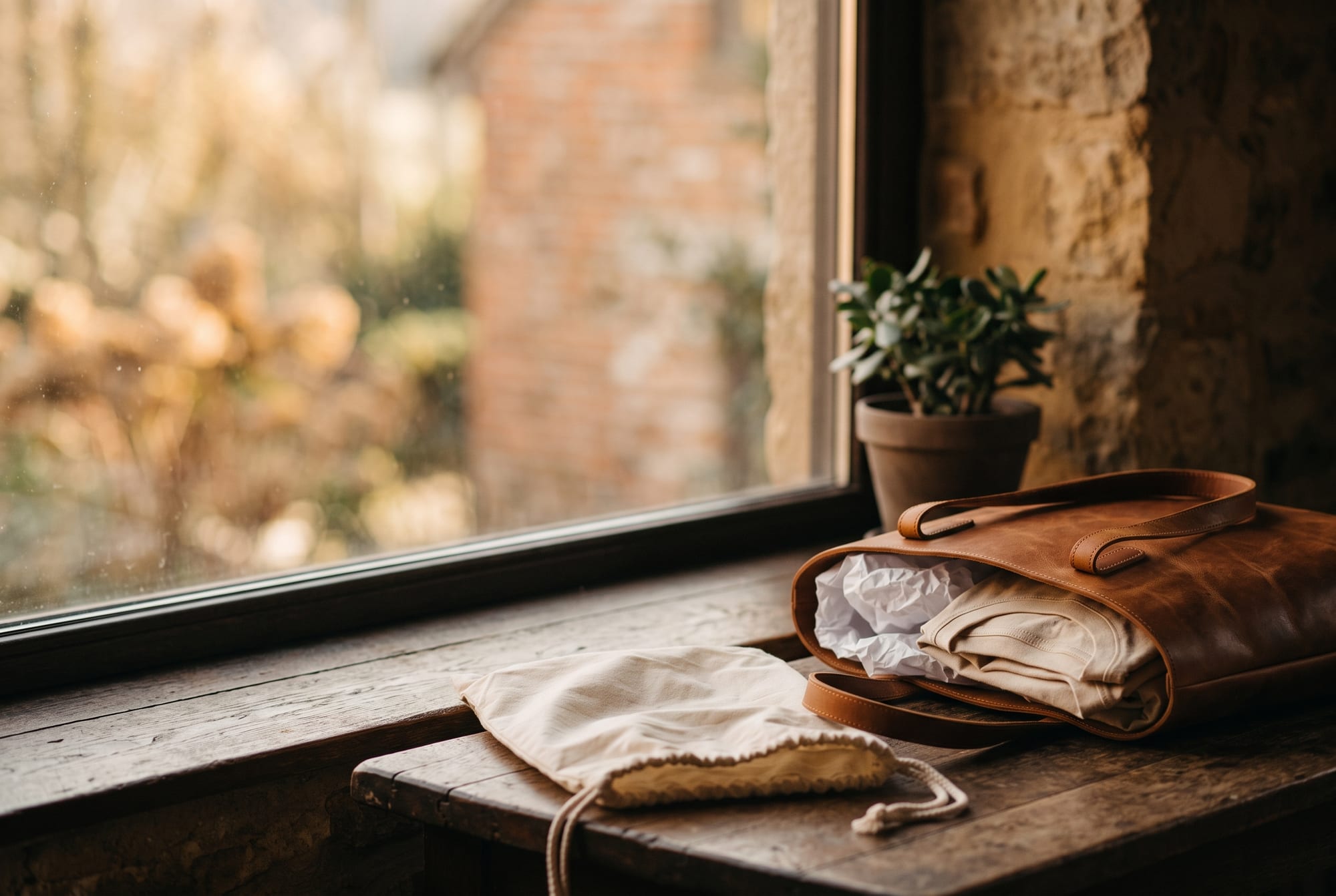
- Stuff it to shape. Acid-free tissue, a clean cotton T-shirt, or bubble wrap in a cotton pillowcase. Not newspaper: the ink transfers to pale linings and light hides. Fill it to its natural shape, not tight — you are supporting it, not inflating it.
- Fold the straps in, don’t hang them. A thin strap on a hook takes the weight of the whole bag for six months and keeps the crease afterwards.
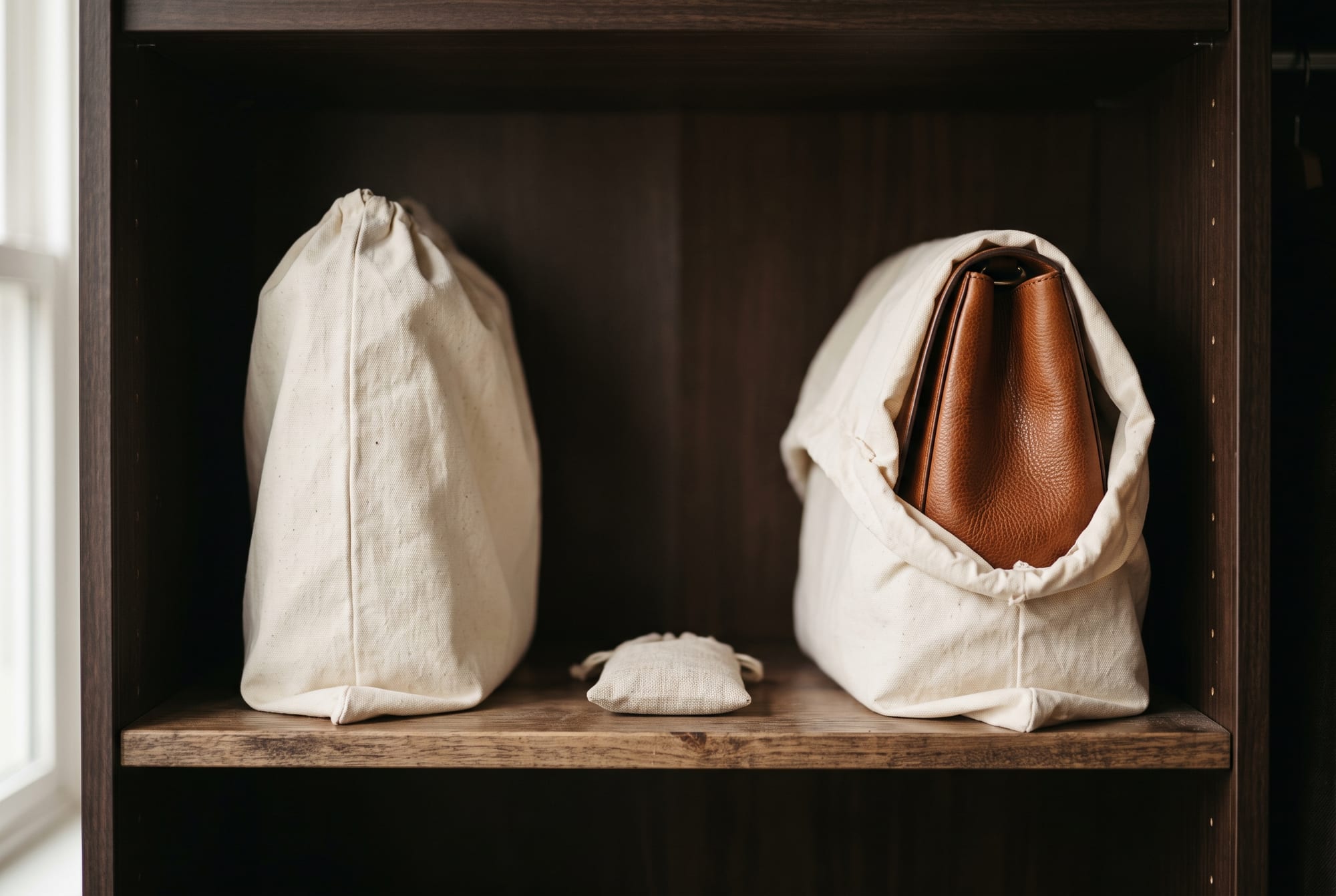
- Cotton bag, or a pillowcase. Any breathable fabric. Keep the original dust bag if it came with one — ours are cotton for exactly this reason.
- Upright, on a shelf, with air around it. Not stacked, not squeezed between two structured bags, not on the floor.
- Put a reminder in your calendar. Once a month, open the cupboard, look, and give the bag a squeeze. Ninety per cent of the mould disasters we see would have been a five-minute wipe if someone had looked in week three.
The four enemies inside a cupboard
Humidity grows mould, and it only needs a warm, still corner. Heat — an attic, a loft, the shelf above a radiator — drives moisture out of the fibres and leaves them brittle; that is where cracking comes from, not from use. Light fades whatever faces it, so a bag stored in the same position for a year comes out two-tone — and some colours show it far more than others; turn it around occasionally. Pressure is the quiet one: leather is a fibre network with memory, and a hard object resting against a panel for months leaves a mark that no conditioner lifts. Structured bags upright, soft bags loosely filled, nothing on top of either.
Mould: the five-step protocol
If you have opened the cupboard to a bloom, do not scrub it and do not panic. Surface mould on a well-finished hide is usually cosmetic if you catch it in the first weeks. What follows is the sequence we use, and the order matters.
Two honest caveats. Mould that has been growing for a year can leave a permanent pale shadow where it digested the finish — the bag will be sound, but marked. And the musty smell outlives the bloom: days of open air, and a shallow dish of baking soda sitting inside the bag (never tipped onto the leather) will pull most of it out. If it lingers, the smell guide explains which smells are the hide and which ones are the cupboard.
Storing for a year or more
Same routine, three additions. Refresh the silica gel every two or three months — used gel is doing nothing, and a saturated sachet is a small wet object next to your bag. Never a vacuum bag, never a sealed plastic box; if you need a box, leave it unsealed on an interior shelf. And do not put cedar oil, mothballs or perfumed sachets against the leather — a cedar block elsewhere in the wardrobe is fine; anything oil-based touching a hide is a stain waiting for you.
If the bag is going away for years rather than months, take it out twice a year, let it breathe for a day, flex the panels gently with your hands, and put it back. Ten minutes a year is the difference between an heirloom and a project.
Leather does not mind being used. It minds being sealed. A cupboard is not a pause button — it is a climate, and you chose it.
Opened a cupboard to something you did not expect? Photograph it in daylight, close up and from a metre away, and send both to info@pazleather.com. Bloom, salt, mildew and dried-out finish look similar in a phone photo and want completely different treatments — we would rather tell you which one it is than read about the scrubbing afterwards.