Guide · 25 August 2026 · by Pınar
Which leather colour should you choose? What each one becomes in ten years
The colour in the photograph is the colour on day one. With vegetable-tanned leather, day one is the least interesting day it will ever have. So choose the destination, not the departure.
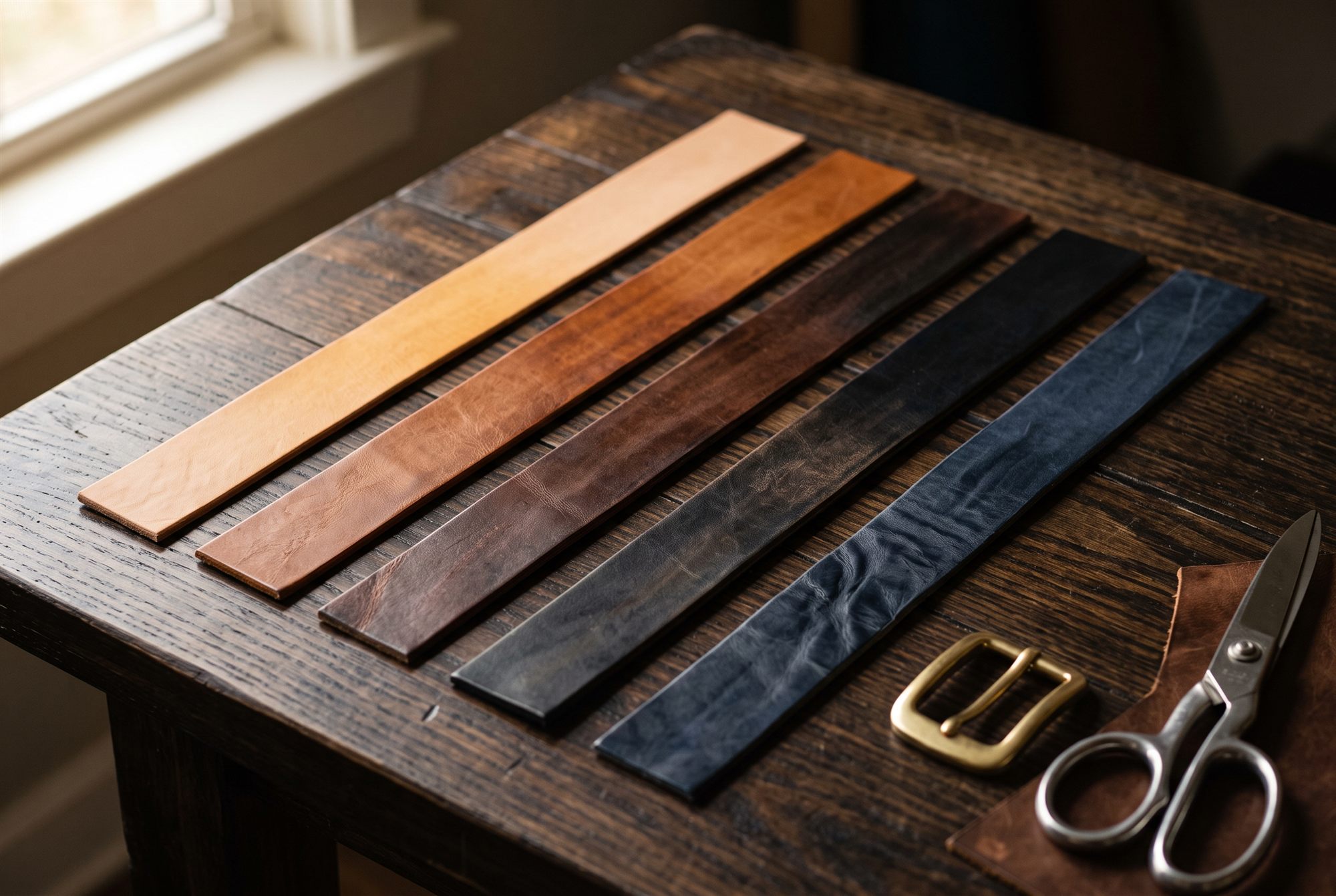
I spent twenty years as an interior architect choosing colours that would stay put — paint, tile, fabric samples that promised to look the same in a decade. Leather broke that habit in a month. A vegetable-tanned hide is the only material I’ve worked with that treats colour as a starting point: sun, hands and time keep painting it long after we’ve stitched it. Which means the real question isn’t “which colour do I like?” It’s “which journey do I want to watch?”
You don’t choose a leather colour. You choose a direction.
Five colours, ten years
The pattern across all five: the lighter the leather, the more it says. Natural, undyed veg-tan is a blank page — it will record the sun of your first summer, the oils of your hands, the corner you brush past every morning, all in shades of honey and amber that no tannery can pre-order. Black, at the other end, holds its colour and lets the surface do the ageing: a deepening softness and sheen rather than a change of hue. Neither is better. One is a diary in ink, the other in pencil.

Choose by how you live
The material changes the colour’s story
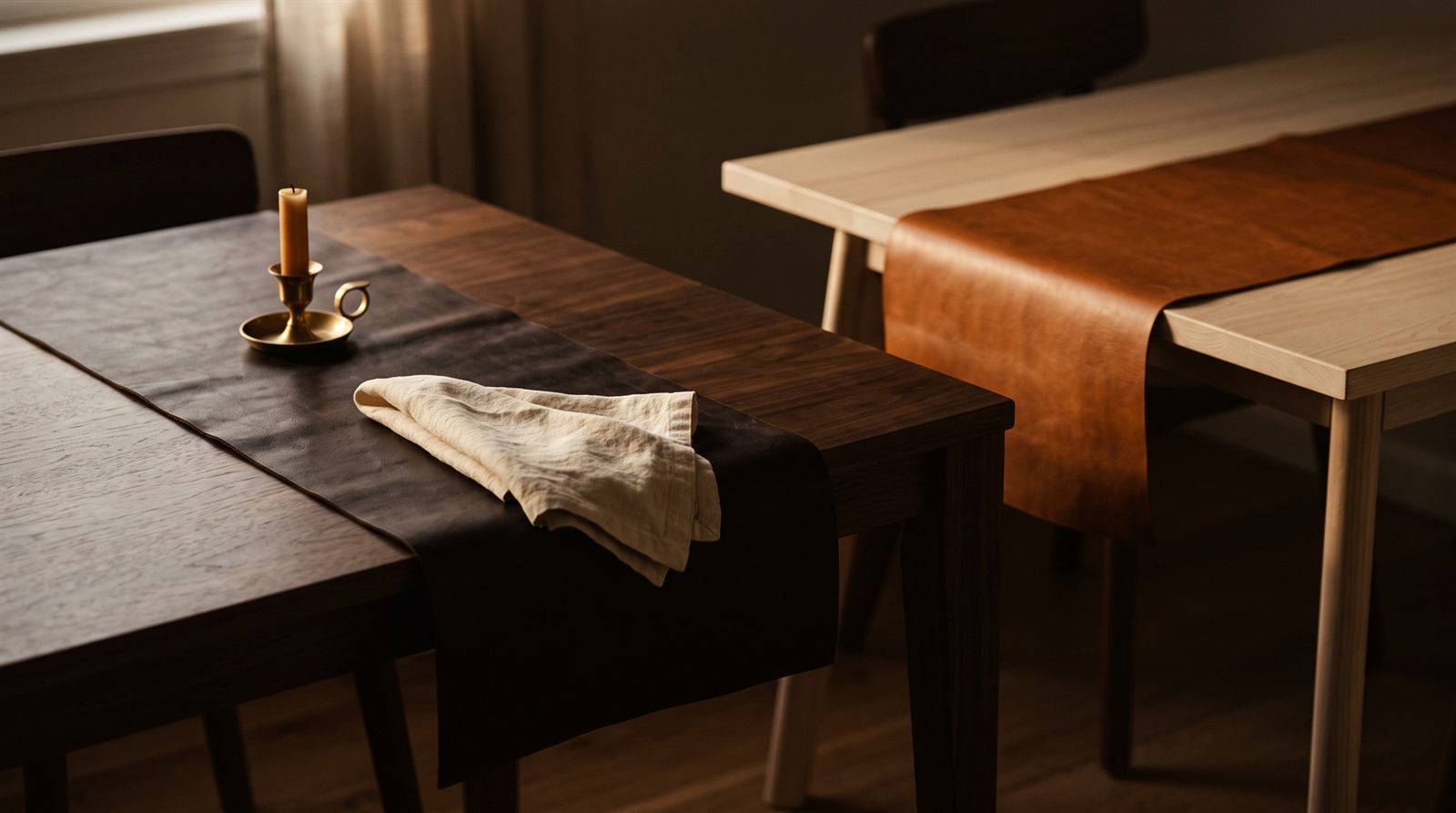
The same cognac tells two different stories on two different hides. On Crazy Horse it lives as a two-tone landscape from day one — light where it folds, deep where it rests — and marks come and go with your hands. On Pueblo it starts matte and unified and slowly polishes to a glow exactly where you touch it most, so the colour maps your habits: a darker corner where your thumb opens the flap, a brighter panel where the bag rests on your hip. Choose the colour first, then ask which hide should carry it.
A designer’s three honest warnings
Natural is beautiful and demanding. It shows water marks, oil spots and a jeans-dye transfer more than any other shade for the first year; after that, everything blends into the honey. If you want the journey but not the anxiety, cognac is the same road with the first mile already walked. Black shows scratches as pale lines on veg-tan — a warm thumb softens most of them, and the rest become the sheen. Very bright dyes (true reds, greens, bright blues) are almost always chrome-tanned: they’ll stay exactly that colour and never patina — which is fine if that’s the point, and a disappointment if you wanted the story.
Pick the colour you’ll love in year ten. Year one will take care of itself.
Still torn between two? Send us a photo of your wardrobe or your table at info@pazleather.com — choosing colours for other people’s lives was my job for twenty years, and it still is.
Further reading
- How to decorate with leather: five surfaces and four pairings
- How to style a leather table runner: an interior architect’s six rules
- Burgundy leather: what autumn’s “new neutral” actually does on a real hide
- Patina: the story your leather writes about you
- What is Crazy Horse leather? (and its quiet cousin, Pueblo)
- Vegetable-tanned vs chrome-tanned
- The shop — see the colours on real pieces