Guide · 8 October 2026 · by Zafer
Dye transfer, both ways: why new leather marks a shirt, and why jeans mark the leather
They look like two separate complaints and nobody treats them as one subject. A new red wallet leaves pink on a cream coat; a pale natural tote comes back from a weekend with a blue-grey cast across one face. Same physics, opposite direction — and only one of the two can be put right.
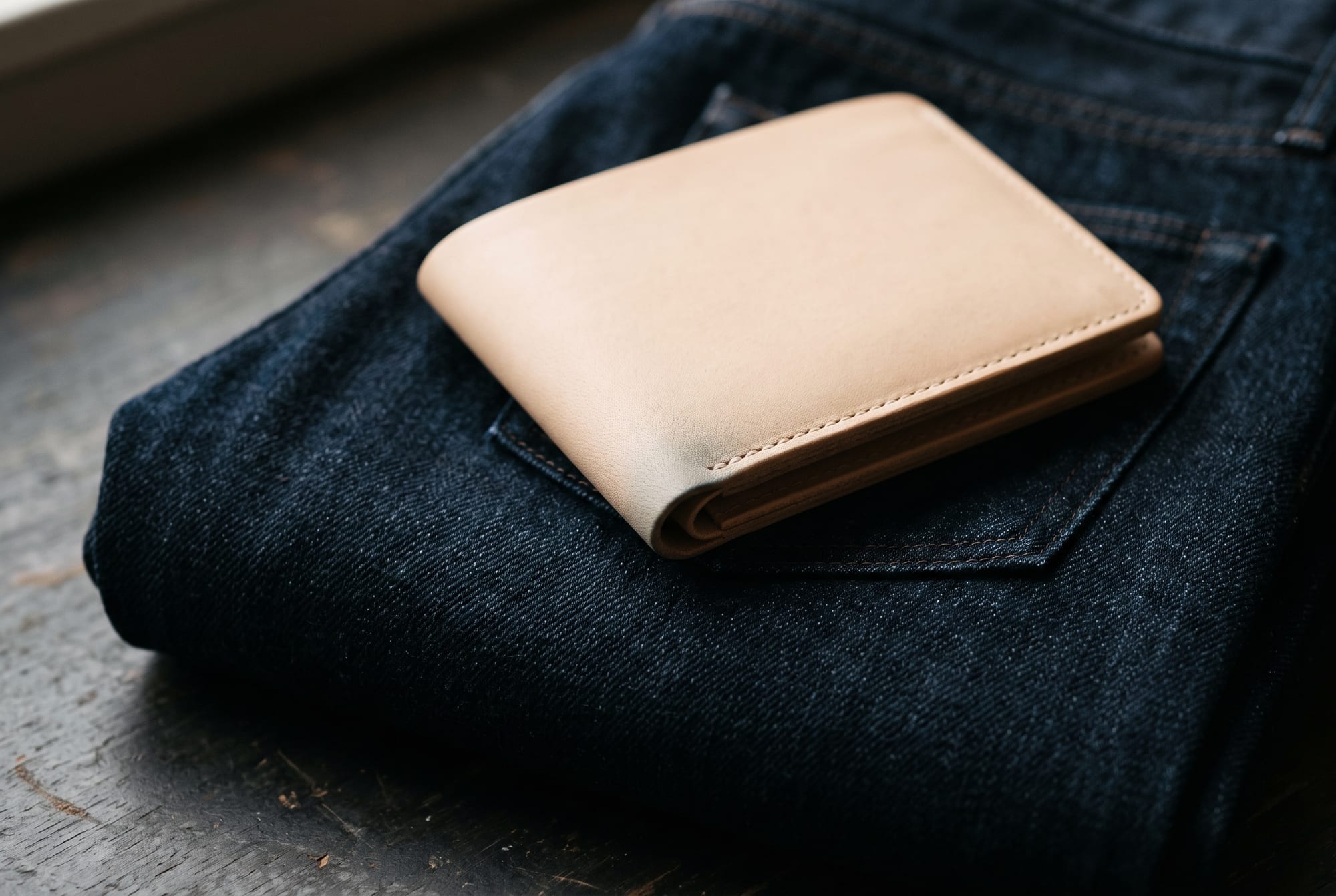
Two complaints that sound entirely unrelated. One: my new burgundy wallet has put colour on the lining of a pale jacket pocket, is it faulty? The other: my natural tote has gone slightly blue down one side, is it faulty?
Neither piece is faulty, and the two describe the same phenomenon from opposite ends of it. Nobody writes about it that way. Search either complaint and you will find pages about one direction only — how to stop leather bleeding onto clothes, or how to get denim dye off a bag — as though these were unrelated problems that happen to share a word.
They are one problem. And the useful question is not which object is defective but which of these two materials is holding its colour more loosely, because that is the direction the colour will go.
Colour moves from loose to absorbent
Dye transfer needs a donor and a receiver. The donor is whichever material has colourant that is not firmly bound to it. The receiver is whichever surface is more willing to take something in.
Put a new burgundy wallet against a cream cotton lining and the leather is the donor: freshly dyed aniline leather always carries a small surplus of colourant that never bonded, and cotton is a thirsty, open fibre. Put a pale undyed tote against a pair of raw jeans and the roles reverse completely. Now the denim is the donor — and uncoated vegetable-tanned leather is one of the most absorbent surfaces in your wardrobe.
Nothing about the leather changed between those two cases. What changed is who it was sitting next to.
Why leather gives colour up: crocking
The trade word is crocking, and it is a side effect of the finish most people say they want.
On an aniline-dyed hide the colour is in the leather. The dye goes into the fibre in the drum, is fixed there by the tannage, and nothing is laid over the top — which is exactly why you can see the grain, why the surface breathes, and why it will take a patina. But a dye bath is not perfectly efficient. Some colourant ends up sitting in and just under the surface without ever bonding, and that surplus is mobile. Add friction and a little moisture and it moves.
A pigmented hide does not crock, because the colour is in a binder film sealed on top. That film is also why pigmented leather cannot patina and why, when it does fail, it fails by cracking and peeling rather than by fading. You get to choose which trade you want. You do not get both.
Three things about crocking that are worth knowing before it surprises you:
- It is a first-weeks phenomenon. The surplus is finite. Once it has gone — onto your clothes, onto a cloth, onto the inside of a pocket — there is no more of it. A piece that crocked a little in month one will not be doing it in month six.
- It is strongly colour-dependent. Reds and burgundies are the worst offenders in the whole wheel; deep blues are next. Browns, cognac and black have little to give. Natural and undyed leather cannot crock at all, because there is no dye in it to lose.
- A lot of it means something. A faint blush on a damp white cloth is normal on new aniline leather. A clear stain means the dye was never properly fixed, and that is a legitimate complaint to take to whoever sold it to you.
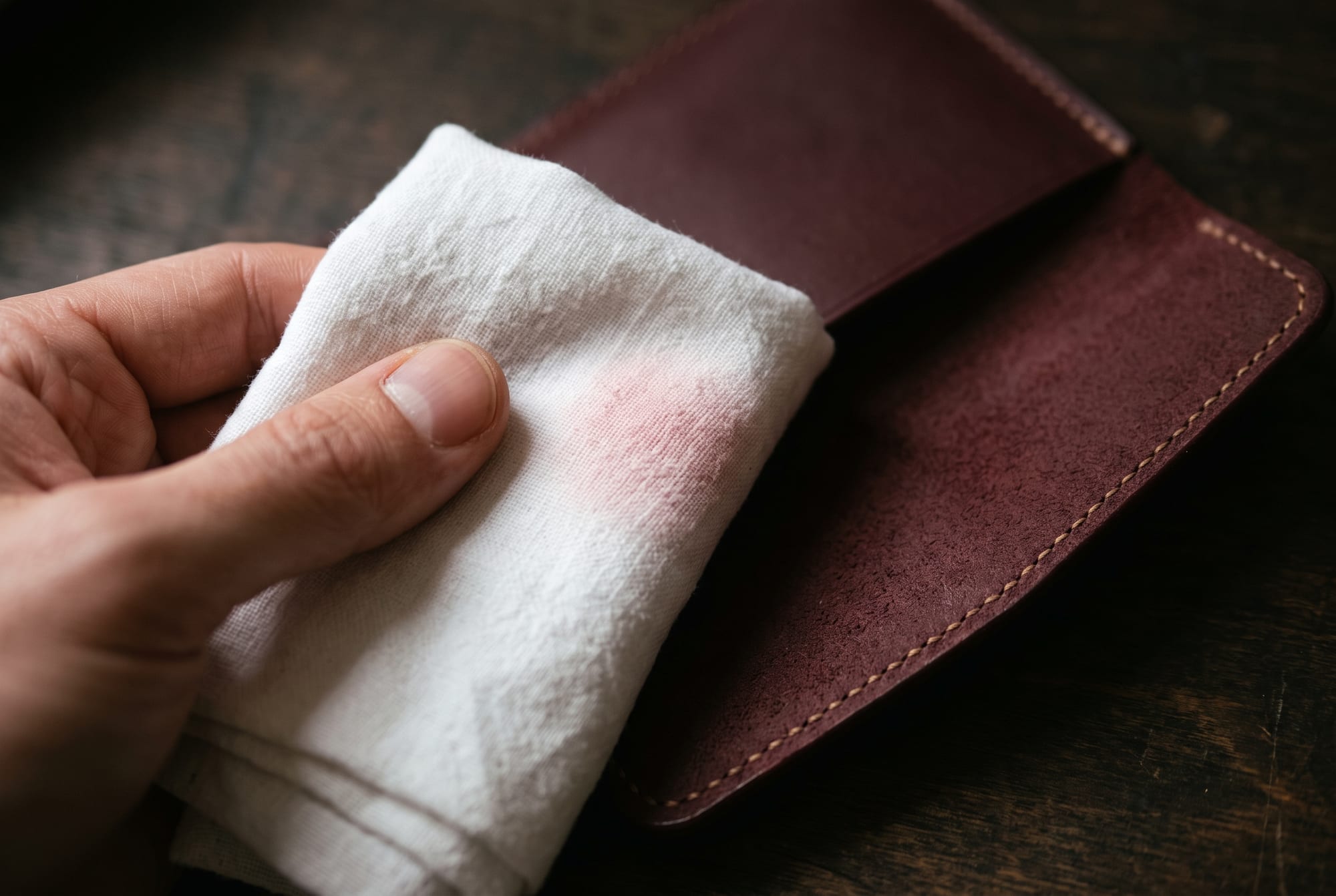
The test takes ten seconds and you should do it on arrival, not after an accident. Press a damp white cotton cloth firmly against an inconspicuous part — the inside of a flap, the back of a strap — hold for a few seconds, and look at the cloth. The burgundy guide describes the same test, because red is where it matters most.
Why denim gives colour up, which is the half nobody explains
Indigo behaves unlike almost any other dye in clothing, and once you know how, the blue cast on a pale bag stops being mysterious.
Most garment dyes are built to penetrate and bond to the fibre. Indigo does not. It is a vat dye applied in repeated dips, and it builds up in layers on the outside of each cotton yarn rather than soaking into its core — which is the entire reason a pair of jeans fades the way people like. The pale knees, the honeycombs behind the knee, the worn seat: that is indigo leaving, mechanically, where the fabric flexes and rubs.
Denim fades because the indigo leaves. It has to go somewhere. Your pale leather bag is one of the places it goes.
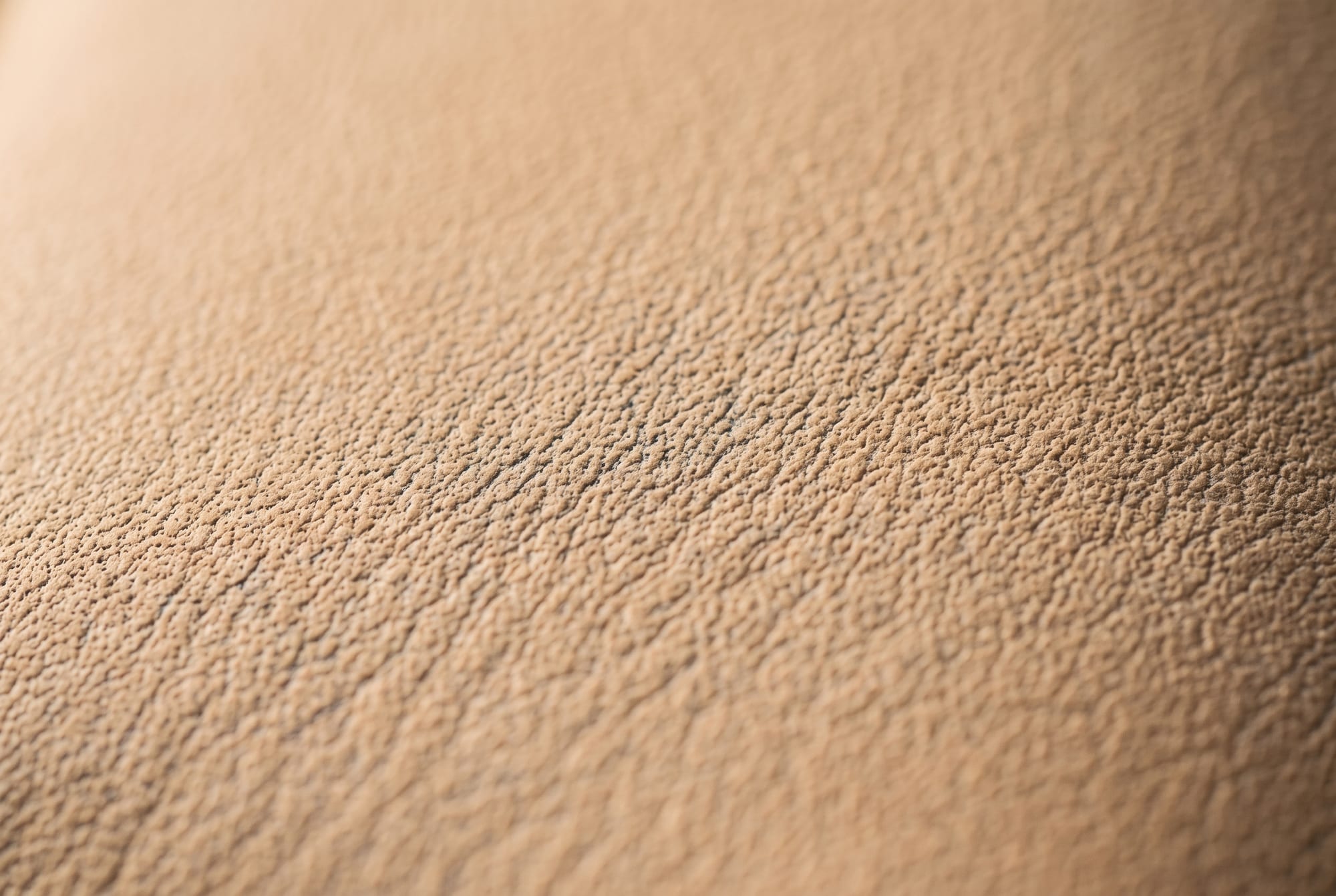
So this is not your jeans being badly made. It is your jeans working as designed, with your bag standing in for the washing machine. And the leather on the receiving end is unusually well suited to the job: uncoated veg-tan has open pores and an absorbent fibre structure that will take in oil, water, and anything dissolved in either.
Worst case, in order: raw or unwashed denim, dark and new, in warm or humid weather, against natural or undyed leather, carried against a hip where it moves with every step. Every one of those is a variable you can change.
What you can actually do about indigo in the grain
I would rather be plain than encouraging. If a pale hide has taken up denim dye, you are not going to get it out. Not with a cleaner, not with a specialist, not with us.
The reason is structural. Indigo that has gone into the grain is held by the same fibre, in the same place, by much the same forces as the leather's own colour and the fat-liquor that keeps it supple. Anything aggressive enough to break the blue out — alcohol, acetone, a strong degreaser, an abrasive — takes the rest with it. You trade a blue cast for a pale, dry, chalky patch with a hard margin round it, which is a worse object than the one you started with.
What does help, in order, and the order matters:
- In the first hours, dry. Some of it is still on the surface. A clean dry cloth, firm, in one direction. You will get the loose fraction and nothing more.
- Then one barely damp pass, whole panel. Same rule as all cleaning on an uncoated hide: the whole face, evenly, or not at all — otherwise you add a water margin to a blue cast. The cleaning guide covers the method.
- Then stop. This is the step that saves pieces. Everything past here makes it worse and the damage is not reversible.
- Then play the long game, which genuinely works. Natural veg-tan is on its way to a deep honey anyway. A faint blue-grey cast at six weeks is sitting on a pale biscuit background; at a year that background has darkened several shades and the cast is far less visible, because contrast is what your eye is reading, not hue.
- And help it along evenly. Turn the piece so the unaffected side gets the same hands, the same light, the same wear. This is the same logic as fixing a sun-faded patch by giving it more light, not less: the problem is almost never the colour, it is the boundary.
You cannot take the blue out. You can let the leather catch up with it — and an even cast on a darkening hide is invisible within a year, while a hard-edged one is visible for the life of the piece.
Prevention, which is the actual answer
Four things, none of which involve buying a product.
- Change the carry, not the bag. Of the three conditions, movement is the easiest to remove. A bag on a shoulder swings clear; the same bag worn cross-body at hip height is being rubbed against a trouser leg thousands of times a day. One change of strap length does more than any spray.
- Respect new dark clothing for a fortnight. Raw denim, a new black coat, a deep navy dress. Wash new dark garments once before they spend a day pressed against pale leather, and keep pale pieces off the lap in wet weather.
- Mind the weather, not the season. Humidity and sweat are the multiplier. The riskiest day is not the coldest or the brightest, it is the muggy one.
- Think about it when you choose the colour. This is the honest one. Natural is the most beautiful and the most demanding shade we sell, and its first year is the vulnerable one in every direction at once — water marks, oil spots, denim dye. Cognac is the same journey with the first mile already walked. If a piece is going to live against dark clothing, that matters more than whether you prefer the paler swatch in a photograph.
A word on protector sprays, since everyone asks. They work, in the sense that they reduce absorption. They also sit on the surface, change the hand slightly, and interfere with the very absorbency that makes veg-tan take a patina. On a canvas-and-leather holdall that lives outdoors, fine. On an uncoated hide chosen precisely because it is uncoated, you are treating the thing you paid for as a defect. I do not use them, and I would rather tell you to shorten the strap.
Which pairings actually matter
It is worth seeing both columns at once, because almost every shade is risky in exactly one direction and people only ever worry about one of them.
So which of these is a fault?
Neither, in almost every case, and it is worth saying clearly because both complaints sound like a return request.
A little crocking from new aniline leather is a property of the finish, it is finite, and the mark on your cotton will usually come out in a wash. A lot of crocking — a cloth that comes away properly coloured, a stain rather than a blush — is a dye that was not fixed, and that is worth raising.
Indigo on a pale hide is not a fault in the leather at all. It is a fault in the pairing, and the leather was the absorbent partner because absorbency is what it is for. That is the same property that lets it take a patina from your hands rather than staying the colour it arrived in. You cannot have a hide that drinks in oil and light and touch and selectively refuses one particular blue.
An uncoated hide is a record of what it has been near. Most of what it records, you like. This is the one entry you would rather it had not kept — and it kept it for the same reason it keeps everything else.
If you are unsure which direction you are looking at, photograph the piece in indirect daylight, plus a close-up at a low angle, and send it to info@pazleather.com. Blue sitting in the grain and surplus dye sitting on the surface look nothing alike up close, and the answers are opposite.
Further reading
- Which leather colour should you choose? What each one becomes in ten years
- Burgundy leather: the hardest colour to get right
- Aniline, semi-aniline, pigmented: what a leather’s finish decides
- How to clean leather: the step everyone skips before conditioning
- Leather stain first aid: what to do in the first five minutes
- Leather and sunlight: why it darkens and fades at the same time
- What patina actually means, and how long it takes
- Glossary: crocking (dye transfer)