Guide · 19 August 2026 · by Zafer
What is Crazy Horse leather? Meet the hide that scars on purpose
First things first: no horses were involved. Then the stranger truth — this is a leather designed to mark when you look at it, and forgive when you touch it.
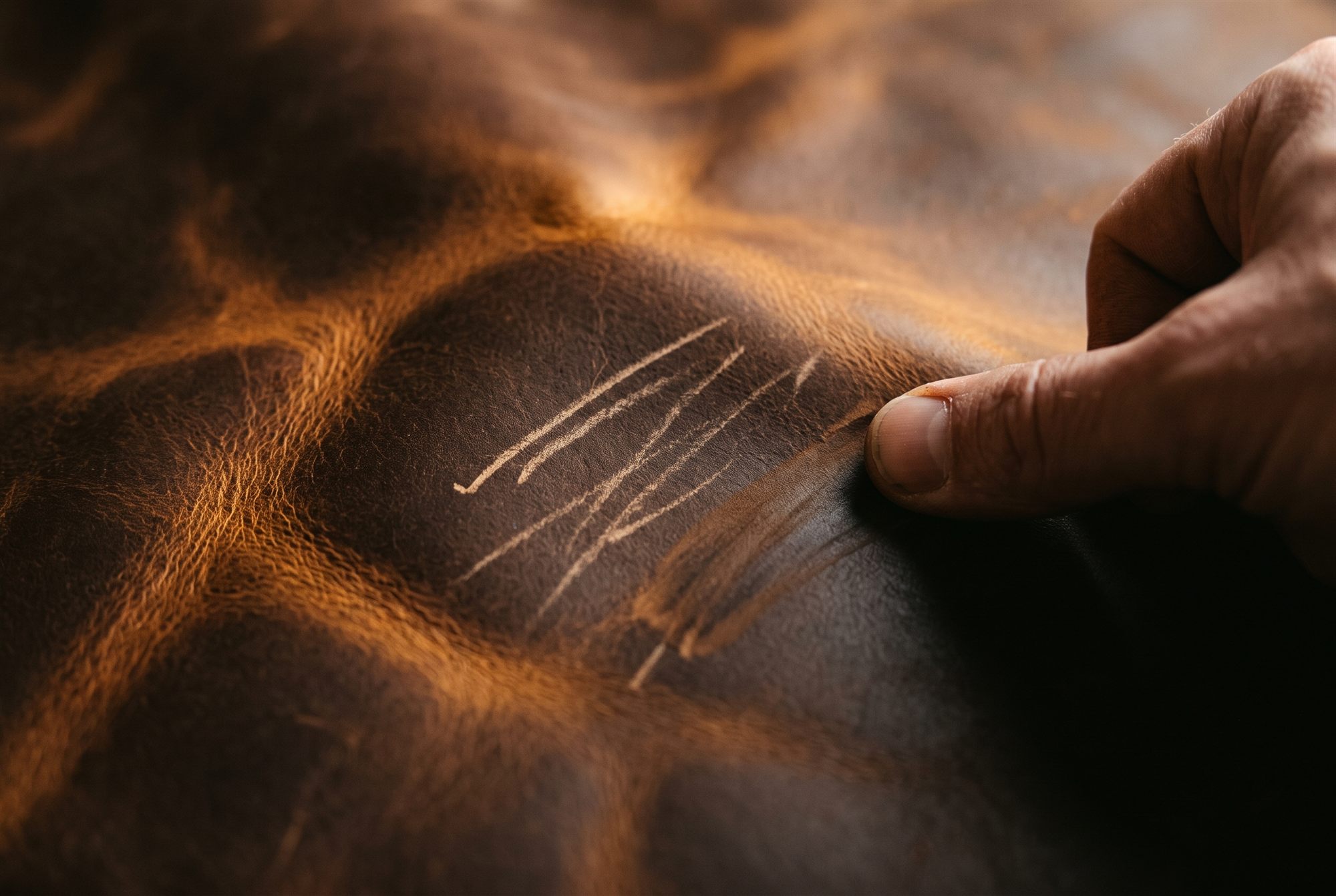
Half the messages we get about our Crazy Horse pieces ask some version of the same two questions: is it really from a horse? and why does it scratch so easily? The answers are no, and it doesn’t — it writes easily, which is a different thing entirely. This is the most misunderstood leather we work with, and the most beloved once it’s understood.
The name, first
Crazy Horse leather is cowhide. The name comes from the look it made famous — the burnished, hard-ridden character of old American saddle leather. Somewhere along the way the trade started calling that wax-storm finish “crazy horse,” and it stuck. What it actually describes is a process: full-grain hide, buffed, then flooded with hot waxes and oils until the surface holds more character than any dye could give it.
The pull-up effect: how it works
That wax layer is the whole personality. Bend the leather, scratch it, even press it firmly, and the waxes shift — the spot turns visibly lighter, like a pale stroke on a dark board. The trade calls this pull-up. And here is the part newcomers miss: it works in both directions. Rub the mark with a warm thumb or a soft cloth and the waxes flow back; the stroke softens, blends, half-disappears into the two-tone landscape.
Crazy Horse writes in pencil — every mark can be softened by a warm hand. Most leathers write in ink.
What it’s like to live with
Dramatic, honestly. A Crazy Horse piece looks different by the end of its first week: handles darken, folds map themselves in light and shadow, the two-tone deepens. It is the extrovert of the leather world — it starts conversations and keeps a visible diary. That’s why we choose it for pieces built for busy lives: table placemats that host dinners, tool rolls that ride in workbags, totes that commute. If you want a material that hides your life, Crazy Horse is the wrong choice. If you want one that narrates it generously, there is nothing better.
Care is almost insultingly easy: the wax is the protection. Dust it, warm-hand the marks you don’t like, and once a year — not twice — a whisper of balm. Our care guide covers the rest.

Meet the quiet cousin: Pueblo
The other hide on our shelves is Pueblo, from the Badalassi Carlo tannery in Tuscany — vegetable-tanned the slow way and left nearly naked: no wax storm, just a matte, faintly roughened surface that feels like fine suede-paper on day one. Where Crazy Horse performs, Pueblo waits. Use it for a month and the roughness begins to lay down; by year’s end the surface your hands travel most has polished itself into a soft, deep gloss that looks lit from inside. Nothing erases on Pueblo — it writes slowly and permanently.
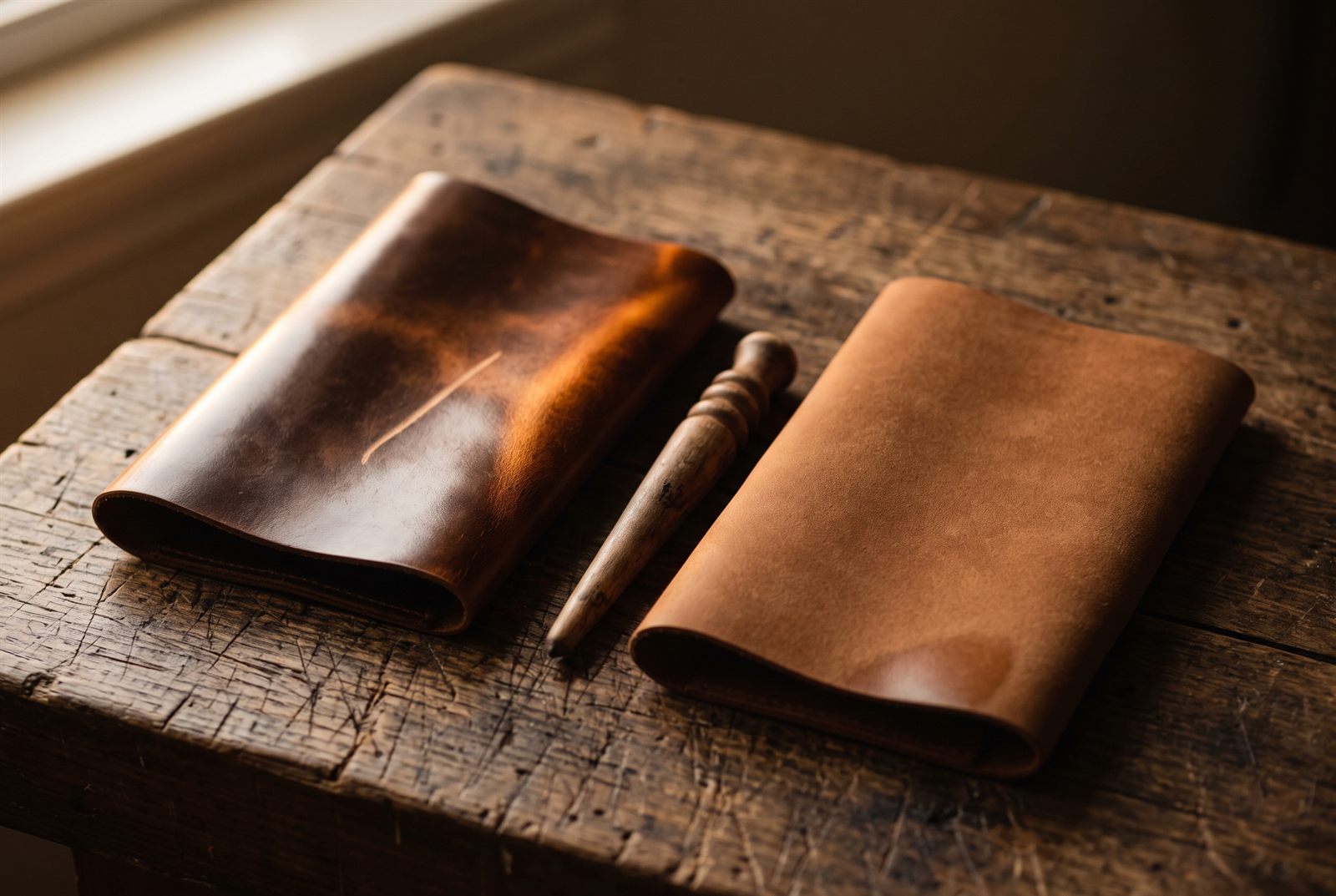
Crazy Horse keeps a diary. Pueblo writes a memoir.
Which one is for you?
Choose Crazy Horse if you love visible character from day one, want marks you can manage with a warm hand, and enjoy an object that clearly belongs to someone. Choose Pueblo if you prefer quiet surfaces, patience, and the long reveal — the piece that looks unassuming in month one and makes people ask “where did you get that?” in year two. There is no wrong answer; there are only two different relationships with time. (And if you can’t decide, the honest tiebreak: Crazy Horse for objects that work — mats, rolls, carriers — Pueblo for objects that accompany — wallets, cases, the things that live in your pocket.)
One caveat, from the bench
Because “crazy horse” names a finish rather than a grade, the market applies it to anything from honest full-grain down to coated splits wearing a wax costume. The usual checks apply: irregular grain, woody smell, fibrous underside — and one extra: the pull-up test itself. Press a fingernail gently across a hidden corner. Real pull-up lightens and then warms back. A printed “distressed look” does nothing, because there’s no wax to move — just a photograph of character, printed on plastic.
Every Crazy Horse and Pueblo hide in our atelier is full-grain and vegetable-tanned, cut and saddle-stitched in Istanbul. Come meet them in the shop — or write to info@pazleather.com and we’ll help you pick your clock.
Further reading
- Leather placemats: what size to buy, and what hot plates really do
- Can suede, patent or vegan leather get wet? Every material, answered
- How to style a leather table runner: an interior architect’s six rules
- How to fix scratches on leather: a maker’s guide by depth and finish
- Vegetable-tanned vs chrome-tanned: what the tannage decides
- Patina: the story your leather writes about you
- How to care for handmade leather: the complete guide
- Glossary: Crazy Horse · Pueblo