Guide · 20 August 2026 · by Zafer
Leather stain first aid: the first five minutes
The coffee is already spreading. Whatever happens to that bag is being decided right now — not by the stain, but by your next move. Here is the protocol we’d give you over the phone.

Most stains that end up permanent didn’t have to be. They were set — by hot water, by rubbing, by a “trick” from the internet involving vinegar or nail-polish remover. The stain starts the damage; panic finishes it. So before the stain-by-stain protocol, tattoo these four rules somewhere handy.
The four golden rules
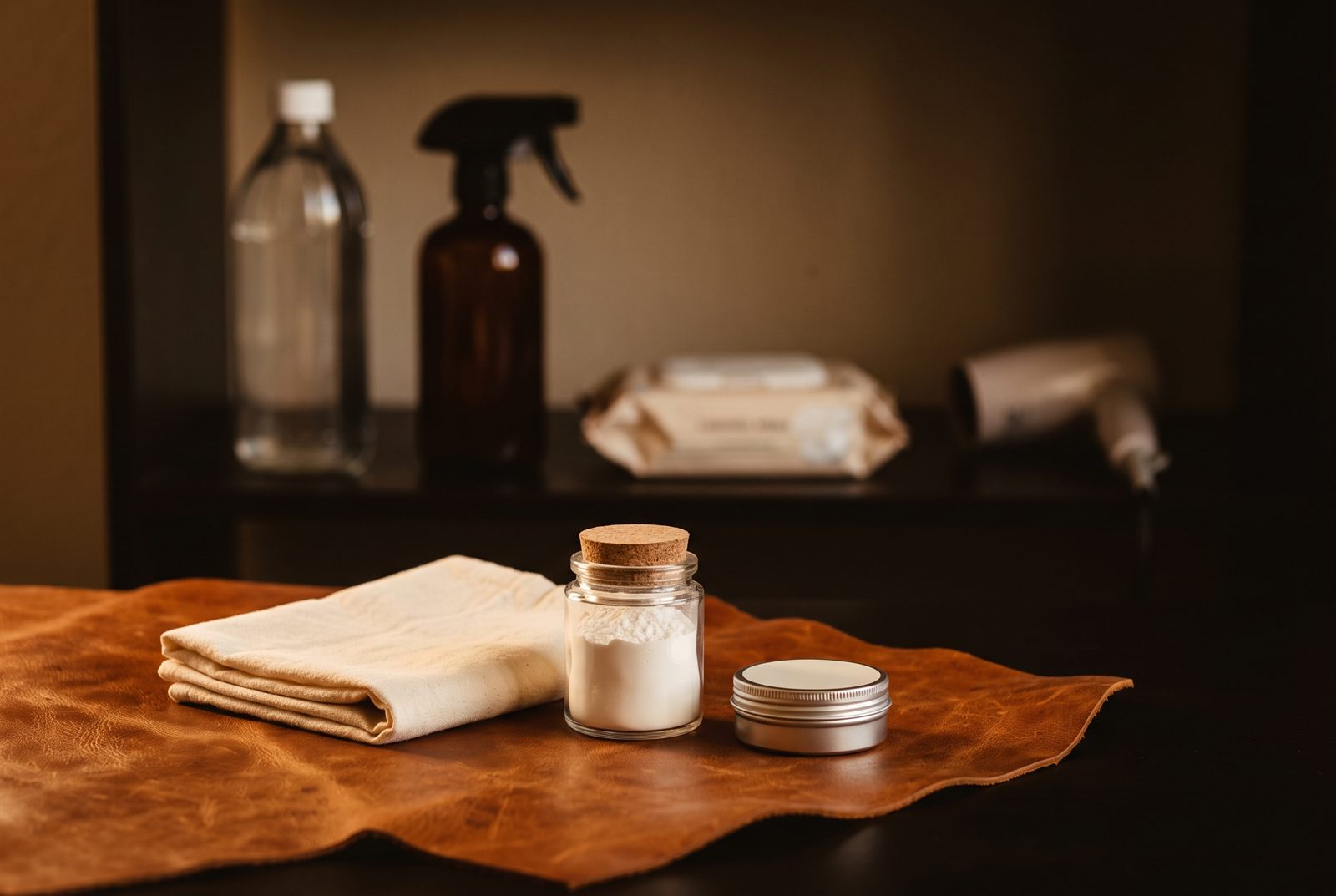
Blot, never rub. Rubbing drives the stain deeper and spreads its border. Press a clean, dry cloth and lift — repeat with fresh corners. Treat the panel, not the spot. On leather, a spot-cleaned circle dries into a tide line; whatever you dampen, dampen edge to edge. No heat, ever. Heat sets stains and cooks fibres — no hair dryer, no radiator, no sunny windowsill. Test a hidden corner first. Every hide drinks differently; thirty seconds under the flap tells you what an hour on the front panel would have cost.
A stain is a race between you and the fibres. You have about five minutes — and the winning move is usually the gentle one.
The triage, in order
The protocols, in full
Coffee, tea and wine. Blot fast and generously. Then — counterintuitive but essential — wipe the entire panel with a well-wrung damp cloth so the moisture border reaches a seam, not the middle of the leather. If a shadow remains once dry, work up a light foam of mild soap in water, apply foam only with a soft cloth, wipe with the damp cloth again, dry slowly, then condition. Most fresh coffee accidents survive completely.
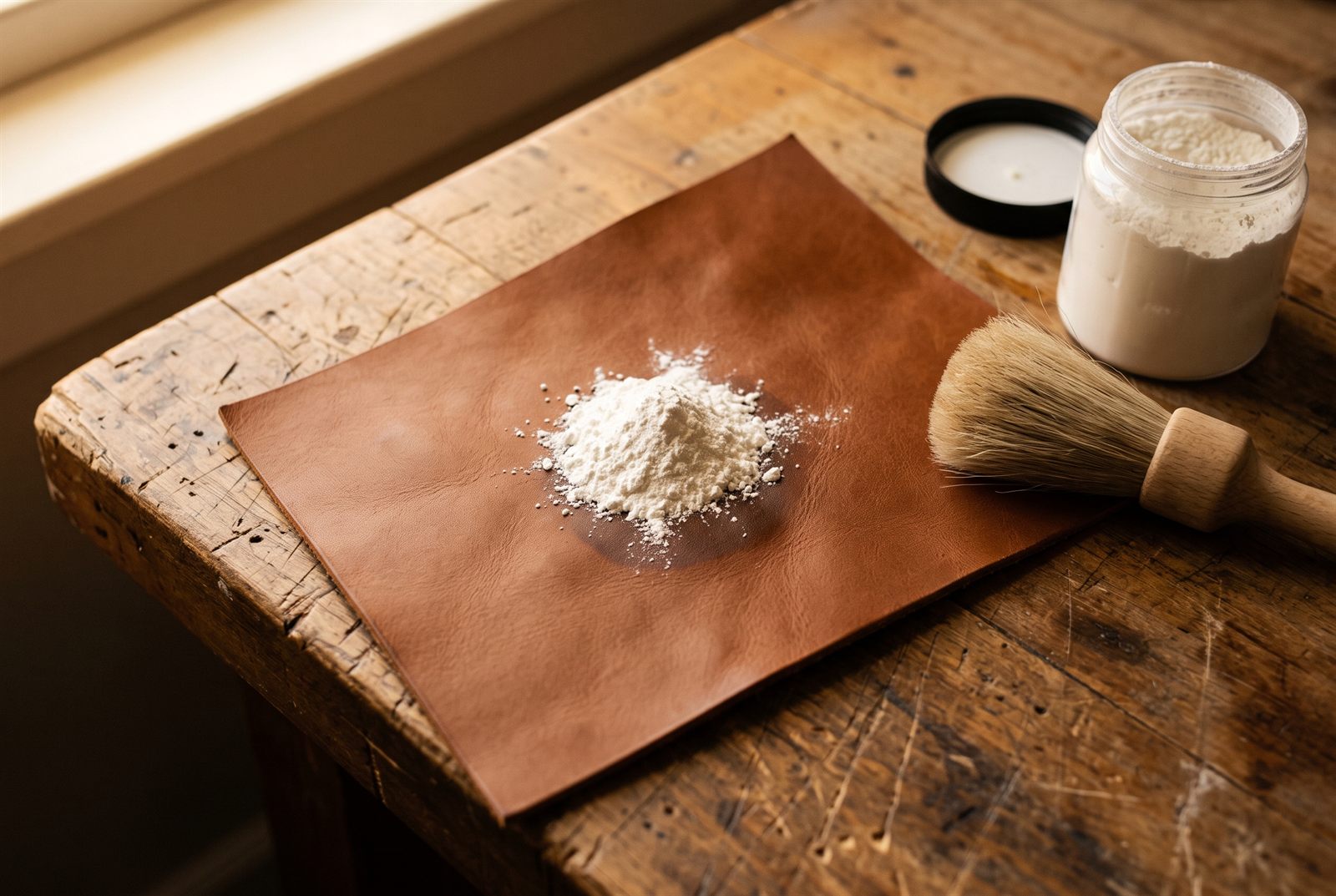
Oil and grease. The opposite instinct: water is useless here and soap too weak. Lift what sits on the surface without pressing, then cover the spot with a small hill of cornstarch or talc and leave it overnight — the powder pulls oil up out of the fibres. Brush off, repeat if needed. A faint ghost often blends into the leather within weeks as the oils migrate; on waxed leathers like Crazy Horse, a warm hand speeds the blending.
Ink. One gentle blot if it’s seconds-fresh — then stop. Every popular remedy — rubbing alcohol, vinegar, hairspray, “magic” erasers — works by dissolving the leather’s finish along with the ink; that advice is written for pigment-coated furniture, and on naked, vegetable-tanned leather it trades a small stain for a large pale scar. Set ink is bench work, or it becomes biography. We’ve said it before in the restoration guide: sometimes the kindest option is to let it join the patina.
Water. Yes, water stains leather — by drying unevenly. Blot the excess and immediately even the score: damp cloth over the whole panel, slow dry at room temperature, then a light conditioning. The dreaded tide line only forms when a wet island dries inside a dry continent.
Mud. Patience is the entire protocol. Wet mud wipes into the grain; dry mud sits on it. Let it cake fully — hours, not minutes — then flick it off with a soft brush and follow the water protocol for any shadow underneath.
Blood. Act fast with a cloth dampened in cold water — never warm, which sets the proteins — dabbing from the edge inward. Then the whole-panel evening, as always.
Which stains forgive — and which punish
Why we keep warning you about the internet’s tricks
Most stain advice online is written for pigment-coated furniture leather — a painted surface that tolerates alcohol and vinegar because the chemicals attack the paint, which is thick and replaceable. Handmade goods in full-grain, vegetable-tanned hide are the opposite: the surface you’re touching is the material, open-pored and alive. The same swab that wipes ink off a sofa cushion bleaches a pale, permanent cloud into an aniline hide. Know which leather you own before borrowing anyone’s remedy — including ours.
Leather forgives almost everything except heat and panic.
And when first aid isn’t enough — the stain is old, the spill was ink, the ghost won’t blend — that’s a restoration question, not a scrubbing question. Photograph it in daylight and send it to info@pazleather.com. Leather advice is free, always — even for pieces we didn’t make.
Further reading
- Olive oil, Vaseline, baby wipes: what not to put on leather
- How to fix scratches on leather: a maker’s guide by depth and finish
- The art of leather restoration: bringing old leather back to life
- How to care for handmade leather: the complete guide
- Patina: the story your leather writes about you
- The Leather FAQ — 35 buyer questions answered