Guide · 9 September 2026 · by Zafer
Why is my leather peeling? Real leather doesn’t — coatings do
Two or three times a month a photograph arrives in our inbox: a jacket shoulder, a sofa cushion, an office chair, shedding what looks like sunburnt skin. The message underneath is always some version of why is my leather doing this? The honest answer is that it isn’t. Leather can’t.
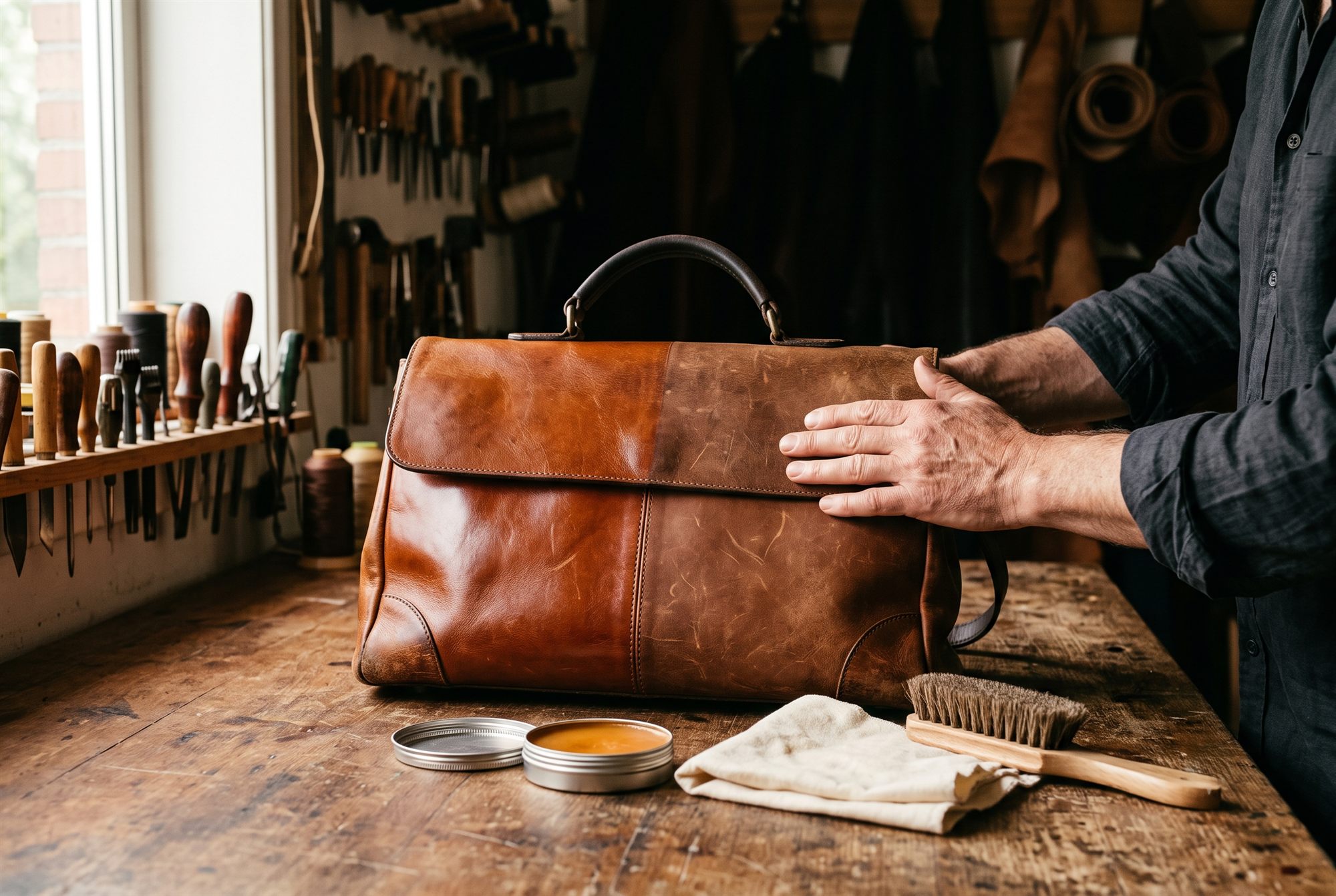
Peeling is a word that describes one thing only: a layer separating from the layer beneath it. Sunburn peels. Paint peels. Veneer peels. All of them are two materials pretending to be one.
Full-grain leather isn’t two materials. It is a single continuous network of collagen fibre — dense at the top where the hair grew, looser underneath — and it goes all the way through. There is no seam inside it, no boundary, nothing laid on top. So there is nothing available to lift.
Which means that when a leather thing flakes, one of two sentences is true. Either it was never leather, or it is leather wearing a coat — and the coat is what’s leaving.
What is actually coming off
Start at the bottom of that diagram and work up, because the bottom two are what almost every peeling photograph turns out to be.
Coated fabric — sold as faux, PU, or, increasingly, vegan leather — is a woven polyester base with a polyurethane skin floated on top. That skin is a polymer with bonds that ordinary humidity slowly attacks. The chemistry has a name, hydrolysis, and the important thing about it is that it is a clock, not a wear pattern. Warmth speeds it up, damp speeds it up, sunlight speeds it up, and a plastic storage bag speeds it up most of all, because it traps the humidity against the material. Nothing you do slows it down much. This is why the most heartbreaking version is always the same story: a bag kept for best, worn twice, opened after four years in a wardrobe and already shedding.
Bonded leather is the same trick with leather dust in it. Offcuts are shredded, mixed with a binder, rolled onto a fabric or paper backing, embossed with a grain pattern and sprayed. Legally it may carry a leather word on the label; structurally it is chipboard. It fails the way chipboard fails — not at one point but everywhere, at roughly the same time, because the binder is the same age across the whole sheet.
The third case: real leather in a coat
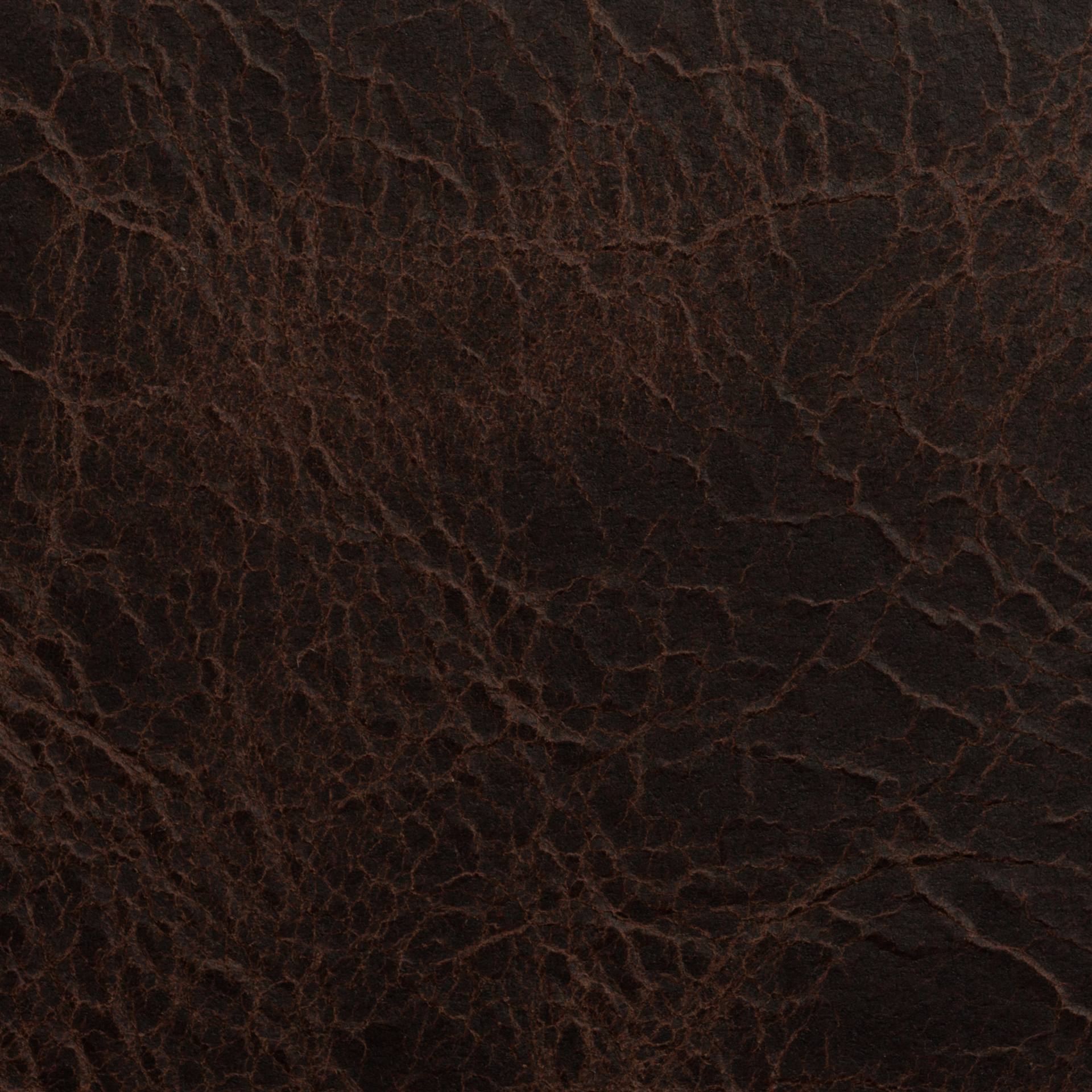
This one deserves better than the internet gives it. Corrected-grain leather — the material behind most of the “genuine leather” labels in a department store — really is hide. It has simply been sanded flat to remove scars and insect marks, filled, then sprayed with pigment and a clear topcoat, so that a thousand bags can look identical. It sits two grades below full-grain, and on a sofa that takes daily punishment it is a reasonable engineering choice.
But the colour you see is a film, and films flex worse than the fibre underneath them. Over years of sitting, folding and rubbing, the film cracks into a crazed pattern — usually first where an arm rests or a knee lands — and then chips lift. The flakes come away the colour of the bag, and what shows underneath is a pale, slightly fuzzy nap, because that is the sanded hide the pigment was hiding.
Good news: because there is still leather under the failure, a restorer can genuinely fix it. They sand the ruined film back, feed the hide, rebuild the colour in thin coats and re-seal. It is the same logic as rebuilding a chipped painted edge, and it is real work — but the object survives.
A flake is never leather failing. It is a coating leaving. The only question worth asking is what the coating was stuck to.
Three tests at the kitchen table
Peeling is not cracking, and not crocking
Three different things get reported to us under the same word, and they have nothing to do with one another.
- Peeling — a layer leaves in flakes or sheets, and something visibly different is underneath. This is a coating, every time.
- Cracking — fissures open in the surface, but the colour runs all the way down into them and nothing comes away. This is real leather that has dried out: fibres that lost their fats and finally broke where the material bends. Feeding it early prevents it; once the fibres are cut, only a restorer can disguise it.
- Crocking — colour rubs off onto your shirt or your palm, but the surface stays intact. That’s surplus dye, not a failure of the material, and it usually stops after a few weeks of use.
Knowing which one you have matters, because the first can’t be prevented, the second can, and the third mostly solves itself.

So can it be saved?
Honestly, three answers, and only one of them is good.
If it is a hide with a failing finish: yes. Find a leather restorer rather than a cobbler, expect them to talk about sanding and re-pigmenting rather than “conditioning”, and expect it to cost a real fraction of the item’s value. That is the deal, and on a good frame it is worth taking — we have brought back worse.
If it is bonded: no. You can dress a patch with flexible filler and pigment, and it will look fine until the next patch goes, which will be soon, because every square centimetre is the same age.
If it is coated fabric: no. Every repair method on the internet is cosmetic — and I’d rather say that plainly than sell you an afternoon of sanding. What you can do is slow the rest of the wardrobe down: get everything out of plastic covers, off the radiator wall, out of direct sun, and somewhere with moving air.
There is a fourth answer we like better than any of them: if the hardware, the lining and the shape were good, the panels can be re-cut in real hide. Send photographs to info@pazleather.com and we’ll tell you honestly which of the four you’re holding — including when the answer is “this one isn’t worth saving.”
How to never have this conversation again
- Read edges, not labels. Find a cut edge and look for a boundary line. A hide has none; a sandwich always does. It takes five seconds and no shop assistant can argue with it.
- Distrust the word ‘genuine’. On a label it is a grade, and a low one — not a promise. Real and good are different questions.
- Press the grain with a thumbnail. Full-grain lightens and relaxes back. A pigmented film stays flat and slightly plastic under the nail.
- Ask what the colour is. Aniline and semi-aniline dyes go into the fibre. Pigment sits on it. Only one of those can chip.
- Never store leather — of any kind — in plastic. It is the single fastest way to age a coated bag and to mould a real one.
Everything that leaves this atelier is full-grain and vegetable-tanned, dyed through rather than sprayed, and finished with wax rather than film. Not as a boast — it just means the failure mode in this article is unavailable to us. Our pieces will fade, darken, scuff, soften and eventually crack if nobody ever feeds them.
They will not flake, because there is nothing on them to flake off. That is the whole difference, and it is decided long before anyone buys anything — at the moment of choosing.
Further reading
- Aniline, semi-aniline, pigmented: what a leather’s finish actually decides
- Vegan leather vs real leather: what the label doesn’t say
- Leather grades explained: full-grain, top-grain and the rest
- Leather restoration: what can be brought back, and what can’t
- Real leather vs quality leather: two different questions
- Glossary: bonded leather
- Glossary: corrected grain