Guide · 26 August 2026 · by Zafer
Saddle stitch vs machine stitch: the seam that decides how long a bag lives
Two seams can look identical from a metre away. One of them is a single thread waiting to unravel. The other is two hundred independent knots. Here is how to tell — and why it matters more than the leather.

Ask ten people what makes a leather bag last and nine will say “the leather.” We spend our days with hides and we’ll still tell you: the seam matters more. A full-grain panel can outlive its owner; a bag is only as old as its weakest stitch. And the two ways of making a stitch could hardly be more different.
How each seam is actually built
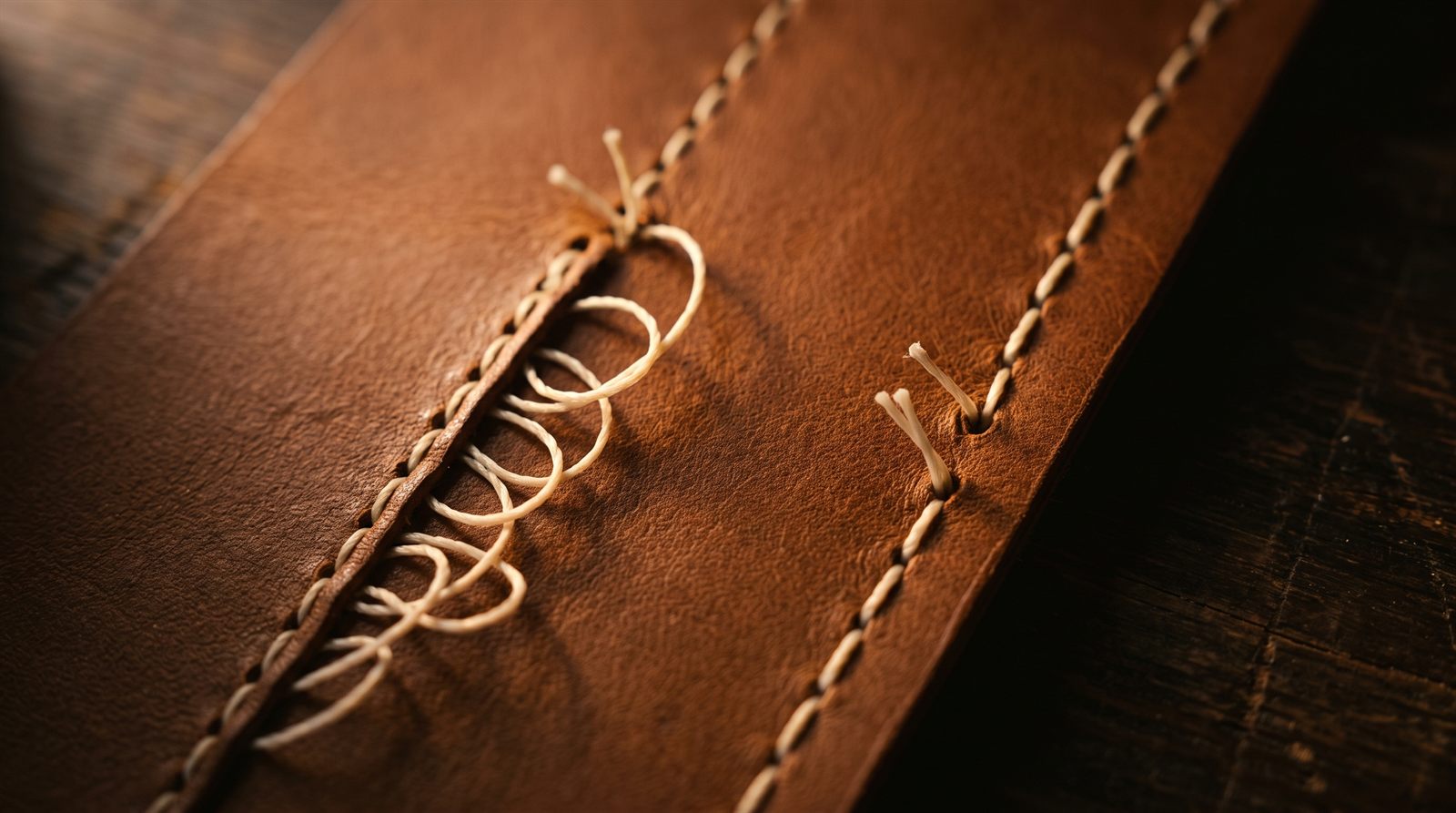
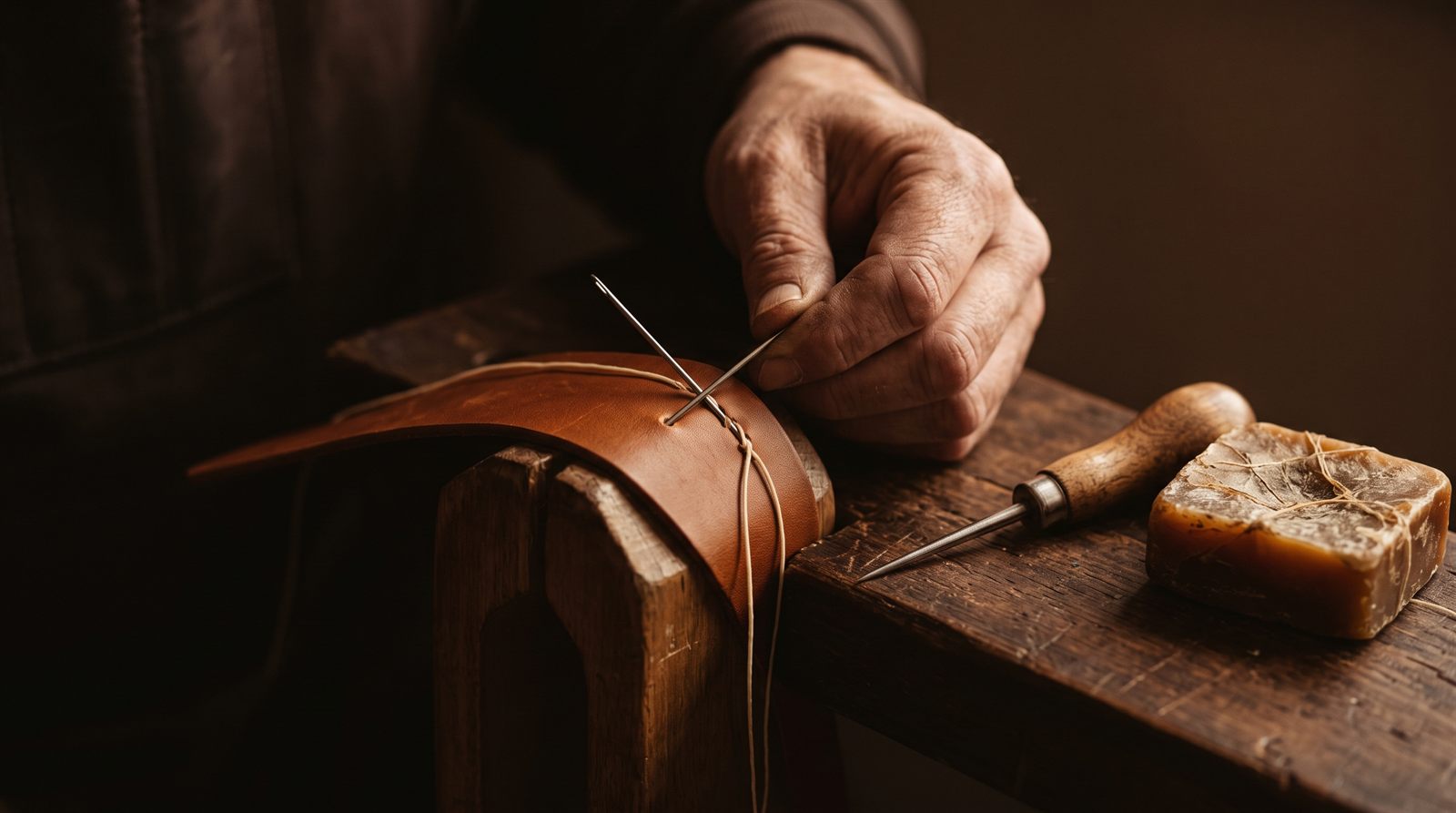
A saddle stitch uses one length of waxed linen thread with a needle on each end. Both needles pass through every hole from opposite sides, so the thread crosses itself inside the leather — each stitch a knot in its own right. A sewing machine, however fine, does something else: a top thread loops down through the hole, hooks around a single bobbin thread running underneath, and moves on. Every stitch depends on the next. It’s a chain, and chains have a well-known property.
A machine ties one knot per seam. A saddler ties one per stitch.
Why it decides the bag’s whole life
Seams don’t fail all at once; they fail at one point — the corner that catches on a door, the strap join that carries the load. On a lock-stitched seam that one cut loop releases its neighbours and the seam ladders, sometimes several centimetres before you notice. The repair is to re-sew the seam, often the whole panel, because the old holes are now a chain of weak points. On a saddle-stitched seam the same cut releases one stitch. The bag keeps working. The repair is to re-stitch from exactly that hole, with the same thread, and the seam is as strong as the day it was made. This is the entire reason a full-grain bag can honestly promise thirty years: the leather was always going to last — the stitching had to be built to let it.
The price of the difference
A machine runs a thousand stitches a minute; a saddler manages about three. On a tote that’s the better part of a working day spent on stitching alone — we opened that ledger in full. You’re not paying for nostalgia. You’re paying for two hundred independent knots instead of one long dependency.
How to tell them apart in a shop
Where machine stitching is the right answer
Honesty cuts both ways. A garment, a lining, a soft lambskin jacket — these want a machine seam: fine, fast, flexible, and never load-bearing enough to matter. Even in bags, a well-made machine seam in heavy thread on a piece that’s meant to be replaced in five years is a perfectly rational product. The mismatch is the one you’ll see everywhere: a lock-stitched bag sold with heirloom language. If the listing says “lifetime” and the seam says “chain,” one of them is lying, and it isn’t the seam.
Why every Paz piece is saddle-stitched
Not tradition for its own sake. We build objects meant to be repaired rather than replaced, and there is only one seam structure that keeps that promise — so it’s the only one we use, from a cardholder to a tote, awl and two needles, about three stitches a minute. It’s also the reason we can offer to re-stitch any Paz seam, ever: the architecture allows it. That offer would be dishonest on a machine-sewn bag. On ours it’s just arithmetic.
The leather decides how a bag ages. The stitch decides whether it gets the chance.
Want to see the two needles cross? The atelier is open by appointment, and the craft section shows the four stages every piece passes through.
Further reading
- Bag hardware: why the metal fails long before the leather
- Burnished vs painted edges: why makers read the edge first
- Leather and lace: why we join Turkish needle lace to full-grain hide
- Why does handmade leather cost more? The honest arithmetic
- How long does a leather bag last? The honest numbers
- How to buy leather accessories: a maker’s 60-second inspection
- Glossary: saddle stitch