Guide · 21 August 2026 · by Zafer
Why does handmade leather cost more? The honest arithmetic
Someone at every fair holds up a wallet, checks the price, and asks the fair question: “Why is this four times the one at the mall?” We love this question. Here is the ledger, open.
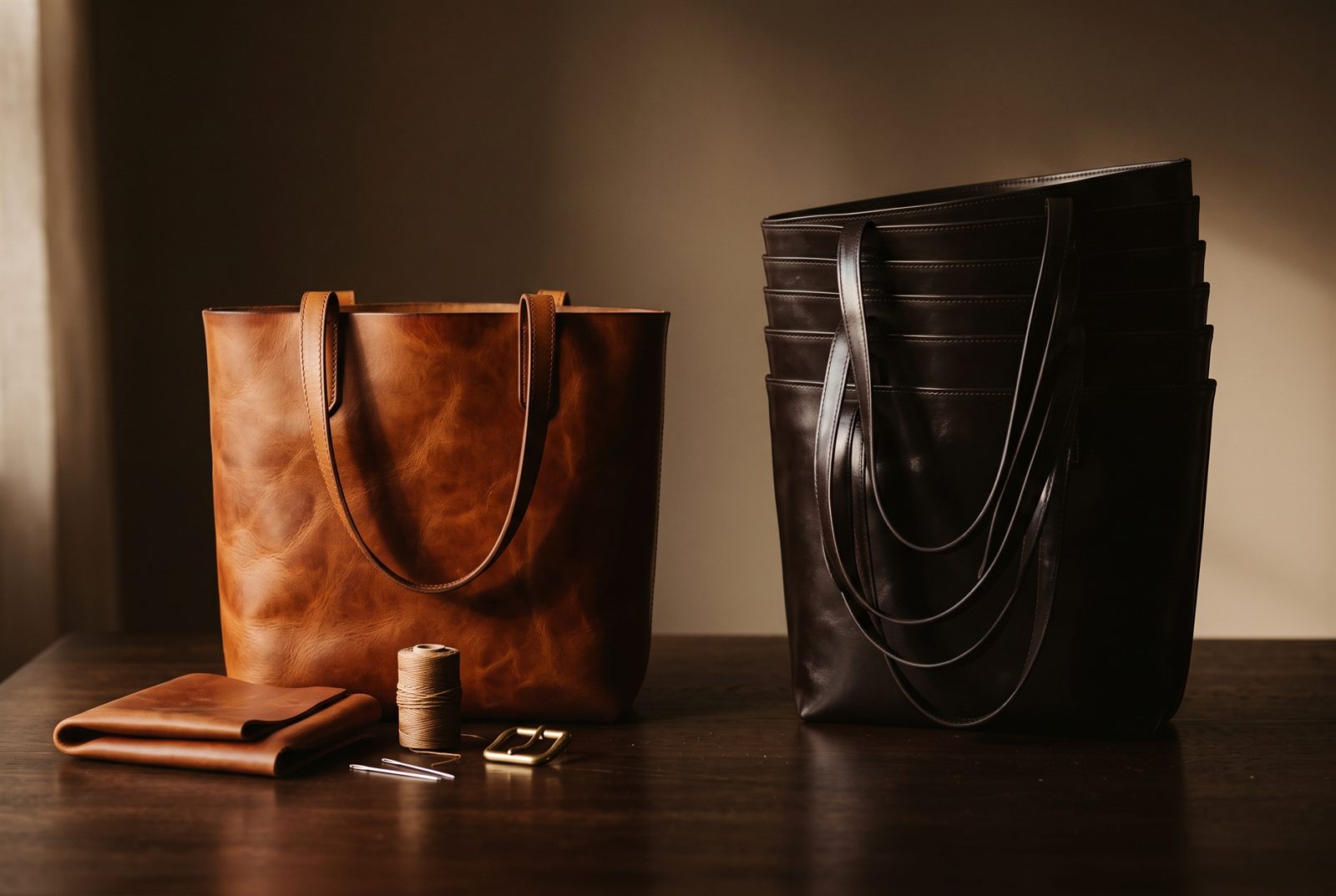
The mall wallet and the handmade wallet look, in a photograph, like the same species. They are not — and the difference isn’t a logo or a mood. It’s arithmetic: different material, different hours, different intentions about the next decade. Let’s do the numbers the way we’d do them across the bench.
Cost one: the hide itself
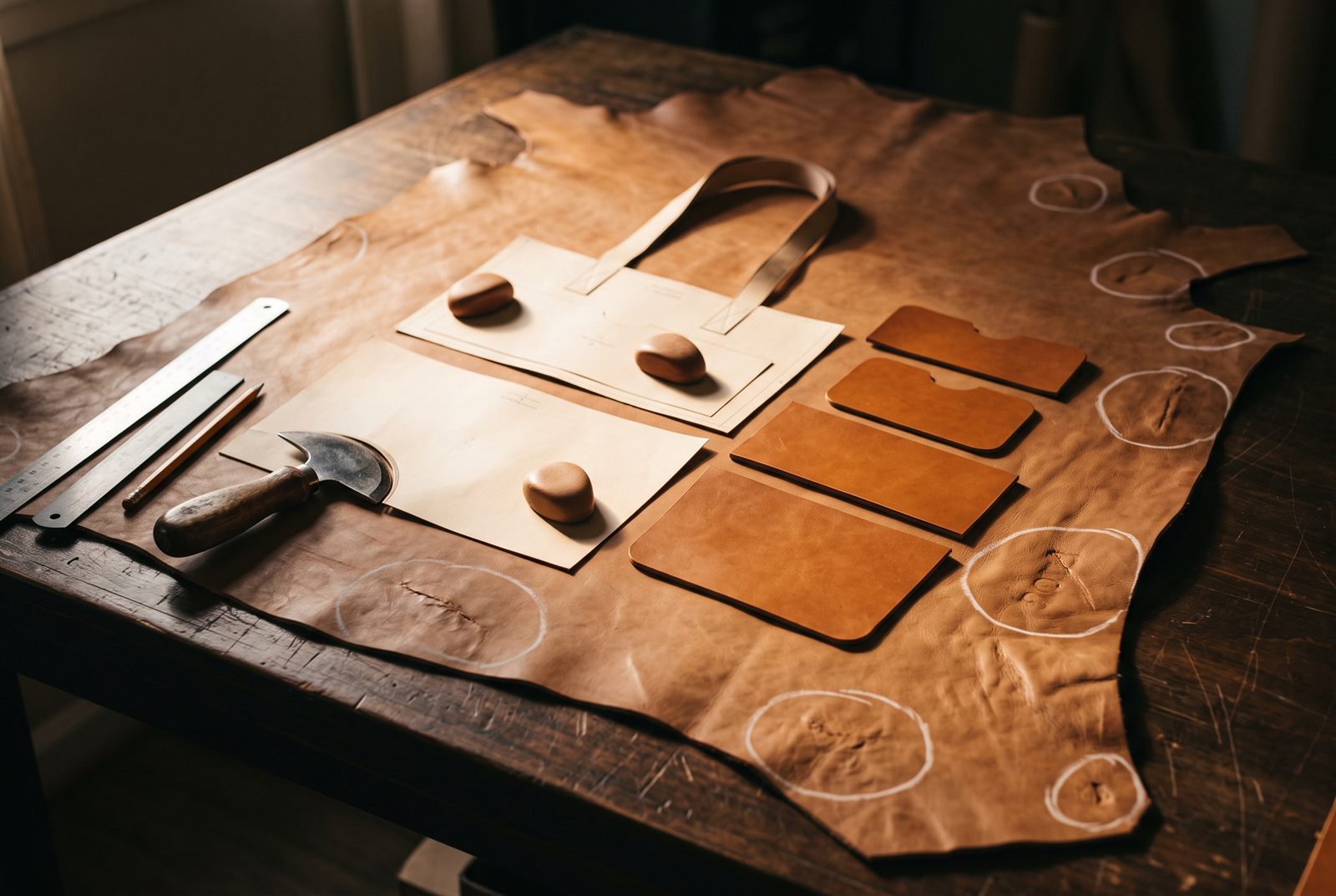
Everything at our bench starts as full-grain, vegetable-tanned hide — the top of the leather market, several times the price per square metre of the coated splits that factory goods are cut from. And you can’t use all of it: full-grain arrives with its scars and brands showing, and cutting honest panels around them wastes a fifth to a third of every hide. A factory presses stamped splits edge to edge like cookie dough; a maker pays for the whole animal and keeps only its best paragraphs.
Cost two: the hours
Here is roughly where a working day and a half goes on a single hand-built tote at our bench:
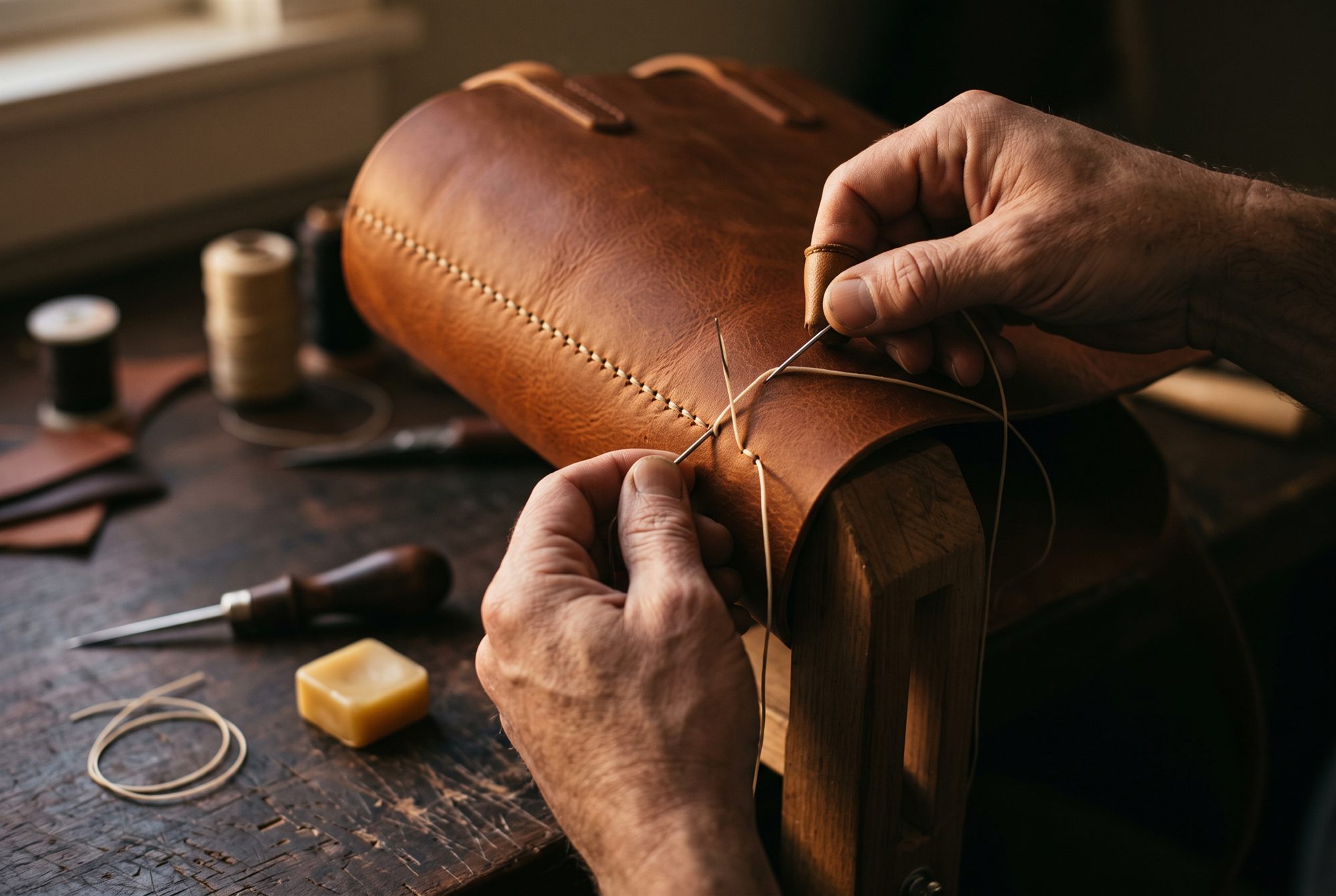
The reason the stitching devours the clock: a sewing machine runs a lock stitch at hundreds of stitches a minute. A saddle stitch runs at about three — two needles, one awl, both hands, every single stitch locked independently by a human wrist. The machine’s seam ladders open from one cut thread; the hand-sewn seam holds, and when it finally wears after decades, it can be re-stitched from exactly where it stopped. You are literally buying repairability by the hour.
Cost three: everything you can’t see in the photo
Burnished edges instead of paint — friction, wax and twenty minutes per metre instead of a dipped coating that chips by year eight. Solid brass instead of plated zinc — hardware priced like metal, not like foil. And small-batch making itself: no thousand-unit discounts, no offshore line, one pair of hands that also answers your messages. (On Etsy, the platform’s cut, payment fees and shipping ride along too — that part is the same for everyone.)
What you are not paying for
Here is the inversion nobody does at the mall: the factory bag’s price is mostly not material and labour. It’s brand licensing, ad campaigns, storefront rent in three cities, and a retail markup chain that multiplies a cheap object into a mid-priced one. The handmade price is the opposite shape — almost all of it is hide and hours. Neither shape is a scandal; they’re just different products. One sells you an image with an object attached. The other sells you the object, with nothing attached but time.
Handmade isn’t expensive. It’s priced in hours instead of shortcuts.
The math that flips the question
This is the same arithmetic we walked through in the lifespan post and the vegan comparison, and it keeps landing in the same place: price tags measure the day of purchase; cost measures the years after it.
When handmade is honestly not worth it
Fair is fair. If you want a trend colour for two seasons, a bag for a festival weekend, or something a toddler will use as a canvas — buy the factory piece and enjoy it guilt-free; thirteen hours of saddle stitching would be wasted on that job. Handmade earns its price only when the object is meant to stay: the daily carry, the gift that should outlive the giver, the piece you plan to repair rather than replace. Match the money to the mission.
You’re not paying for the object. You’re paying for everything that refuses to be automated.
Want to see where the hours go in person? The atelier is open by appointment, the shop lists every current piece, and info@pazleather.com answers the question this article started with — happily, and in one breath.
Further reading
- Burnished vs painted edges: why makers read the edge first
- Quiet luxury is a material, not a logo: a bench-side definition
- Leather and lace: why we join Turkish needle lace to full-grain hide
- How long does a leather bag last? The honest numbers
- Why “real leather” doesn’t mean good leather
- How to buy leather accessories: a maker’s 60-second inspection
- Glossary: saddle stitch