Guide · 18 November 2026 · by Zafer
Cream, wax, oil or saddle soap: which tin your leather actually needs
There are twelve tins on the shelf and no instructions about which one your object wants, so people buy the one with the most confident label. The useful question is not which conditioner is best. It is what is actually wrong with the piece in your hand — and two of the three possible answers are not a conditioner at all.
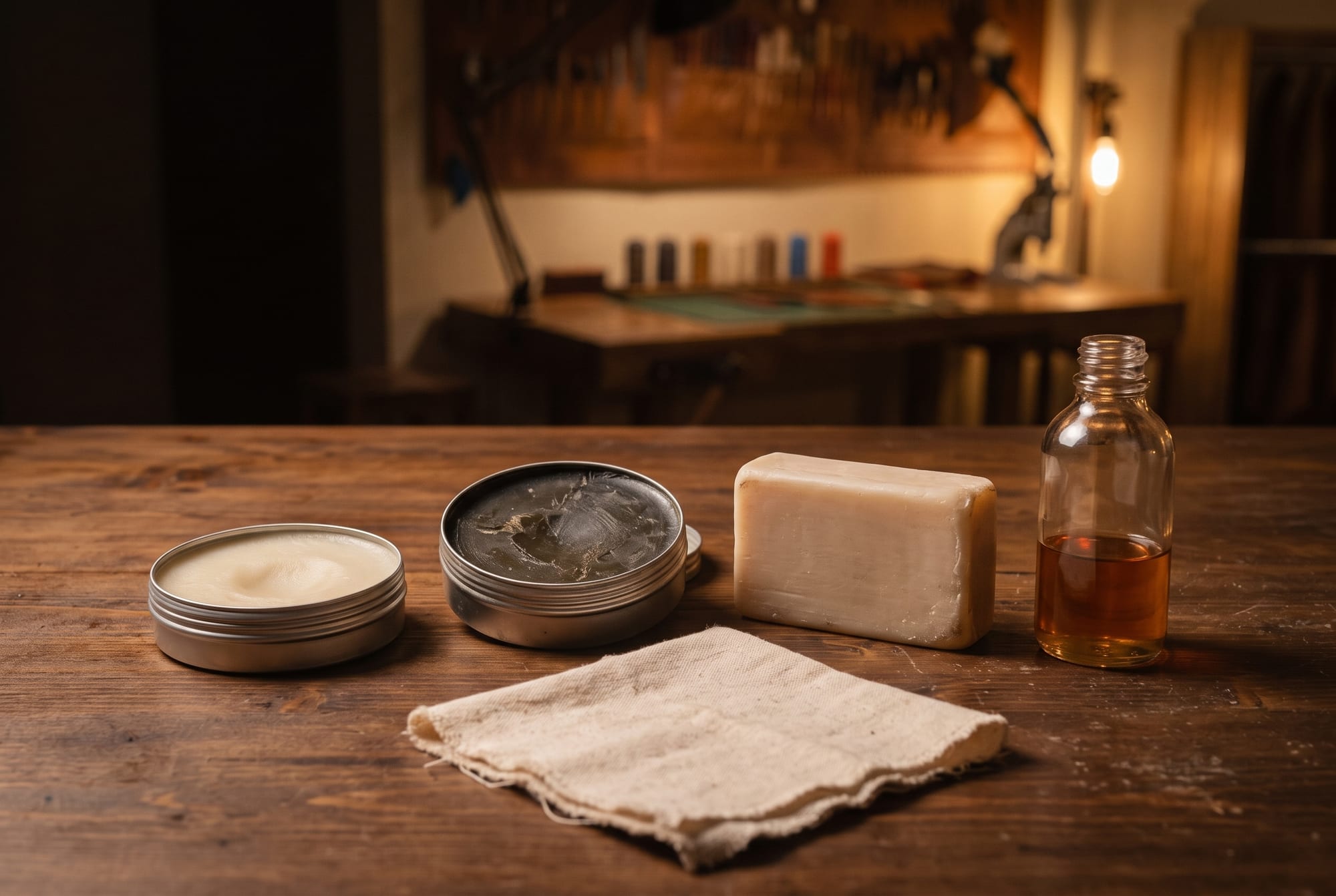
The short answer: diagnose before you treat. If the piece is dirty, clean it — water, a trace of soap, nothing else — and stop there. If it is genuinely dry, meaning it creases stiffly when you flex it, use a cream, thinly, once, and wait two weeks before deciding whether it needs more. If it folds softly but simply looks dull, it needs nothing: dullness is an optical problem, not a nutritional one. Wax is weather protection, not food. Oil is a last resort for leather that is genuinely desiccated, and it cannot be undone. Saddle soap, despite its name and its position on the shelf, is a cleaner.
Most of the leather I see ruined by its owner was ruined kindly. Nobody damages a bag by neglecting it for a year; people damage bags by deciding to look after them and reaching for the wrong tin. So this piece is about the tins: what is in them, where the contents end up inside a hide, and which of those decisions you can take back.
Three states, and the tests that tell them apart
Every piece of leather that someone brings to this bench is in one of three states, and the whole art is in telling which. They look remarkably similar from a metre away.
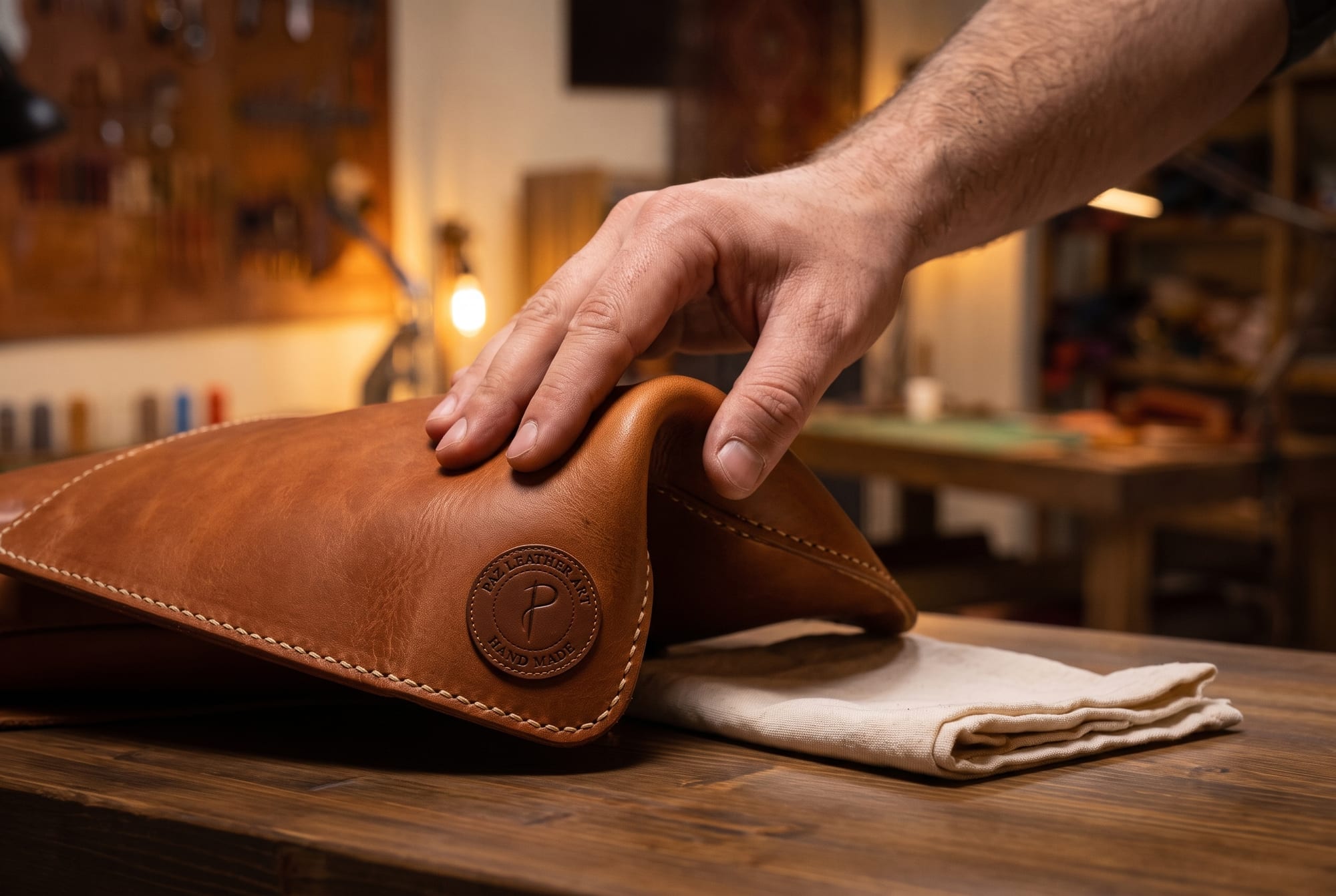
The fold test is the one worth practising, because it is the only reliable way to tell dry from dull. Take an area that flexes in normal use, bend it, and watch what the crease does when you let go. Leather with enough fat in it folds in a soft curve and relaxes back. Dry leather creases to a sharp line, and the line is still there a moment later. That standing crease is the signal, and it is the only signal. Colour is not one — plenty of pale, chalky-looking leather is perfectly supple, and plenty of deep glossy leather is brittle underneath.
Cleaning comes before everything, every time, for a reason that has nothing to do with tidiness: any fat you apply will carry whatever is on the surface down into the fibre with it. The full argument, and the method, is in how to clean leather — it is the step nearly everyone skips.
What is actually in the four tins
The useful way to sort leather products is not by brand or by claim but by where the contents end up. Some things sit on top of the leather. Some go into the top layer of fibres. One goes all the way through. That single distinction predicts everything else, including whether you can change your mind afterwards.
Saddle soap, which is a cleaner
It sits among the conditioners, it is sold alongside them, and it is not one. Saddle soap is a mild alkaline soap with a small amount of fat in it, and its job is to lift dirt, salt and old dressings out of a surface. It does that well, which is why stables have used it for a century on tack that gets genuinely filthy.
Two cautions. It is astringent, so repeated use on an object that is not actually dirty will leave the leather drier than it started — it is taking things away, which is the point. And it must not be left as a film: work it, then wipe it off. It is also wrong for anything with a nap, where it mats the fibres irrecoverably, and for bare vegetable-tanned leather that you want to stay even, because it can blotch. Nap gets brushed, never washed, for the reasons in suede and nubuck care.
Cream, which is the answer four times out of five
A leather cream is an emulsion: a modest amount of fat and wax carried in water. The water is what makes it useful, because it lets a small quantity of fat spread very thinly and evenly and then carry itself into the top layer of fibres as it is absorbed. That is a much more controllable delivery than fat on its own.
It restores suppleness, darkens slightly, and has a natural ceiling: the leather takes what it can hold and the rest sits on the surface, where you can see it and buff it away. If you own one tin and intend to own only one, own this. Neutral rather than coloured, unless you are deliberately trying to even out a worn piece.
Wax, which is weather protection
Wax is solid at room temperature, which tells you everything about where it stays. It does not feed leather — it forms a film on top of it that slows water going in, takes a shine when you buff it, and fills surface scuffs optically.
That film has costs. It slows moisture exchange in both directions, so a heavily waxed piece in a damp cupboard dries out more slowly than a bare one, which is not an advantage. And wax softens with heat: a waxed bag left on a warm surface or in a car will transfer its wax onto whatever it is touching, which is one of the specific problems covered in leather and heat. Wax belongs on boots, saddles, and anything that lives outdoors. It does not belong on a bag that sits against your clothes, and it does not belong inside anything.
Oil, which is a one-way door
Oils — neatsfoot, mink, and the various fish and vegetable oils sold for leather — are free fat with no water in them. They penetrate past the grain, through the corium, and keep going. They soften dramatically, darken dramatically, and cannot be taken out again.
Used correctly, oil is the right tool for exactly one situation: leather that has lost so much of its original fat that it has gone board-stiff and is starting to crack, where the alternative is losing the object. That is the rescue work described in leather restoration, and even there it is applied in several small doses over weeks rather than in one generous soak.
Used incorrectly — which usually means on a healthy piece, by someone being kind — oil lubricates the fibre bundles until the leather has no body left. It goes limp, loses its shape, darkens unevenly and feels slightly greasy for ever. The full list of symptoms is in over-conditioned leather, and it is worth reading before you open a bottle rather than after.
You can always add more. You cannot take any of it out. That asymmetry is the whole of leather care, and it is the reason every sensible instruction says “a thin coat”.
The dose, and the two-week rule
Leather does not finish absorbing when you stop rubbing. A cream applied on Sunday is still migrating through the fibre on Wednesday, and the piece will look and feel different in a fortnight from how it looked after ten minutes.
Which means the sequence that causes nearly all over-conditioning is this one: apply a coat, decide after an hour that it has not done much, apply another, repeat. The piece ends up with three or four times what it needed, and the result only becomes obvious weeks later.
So: one thin coat. A pea-sized amount of cream covers more leather than people expect — a wallet takes less than that. Work it in with a cloth or bare fingers, not a brush. Wipe off whatever has not gone in after fifteen minutes. Then put the tin away for two weeks and judge it then, with the fold test rather than with your eyes.
What to use on which leather
The product follows the finish, because the finish decides what can get in at all.
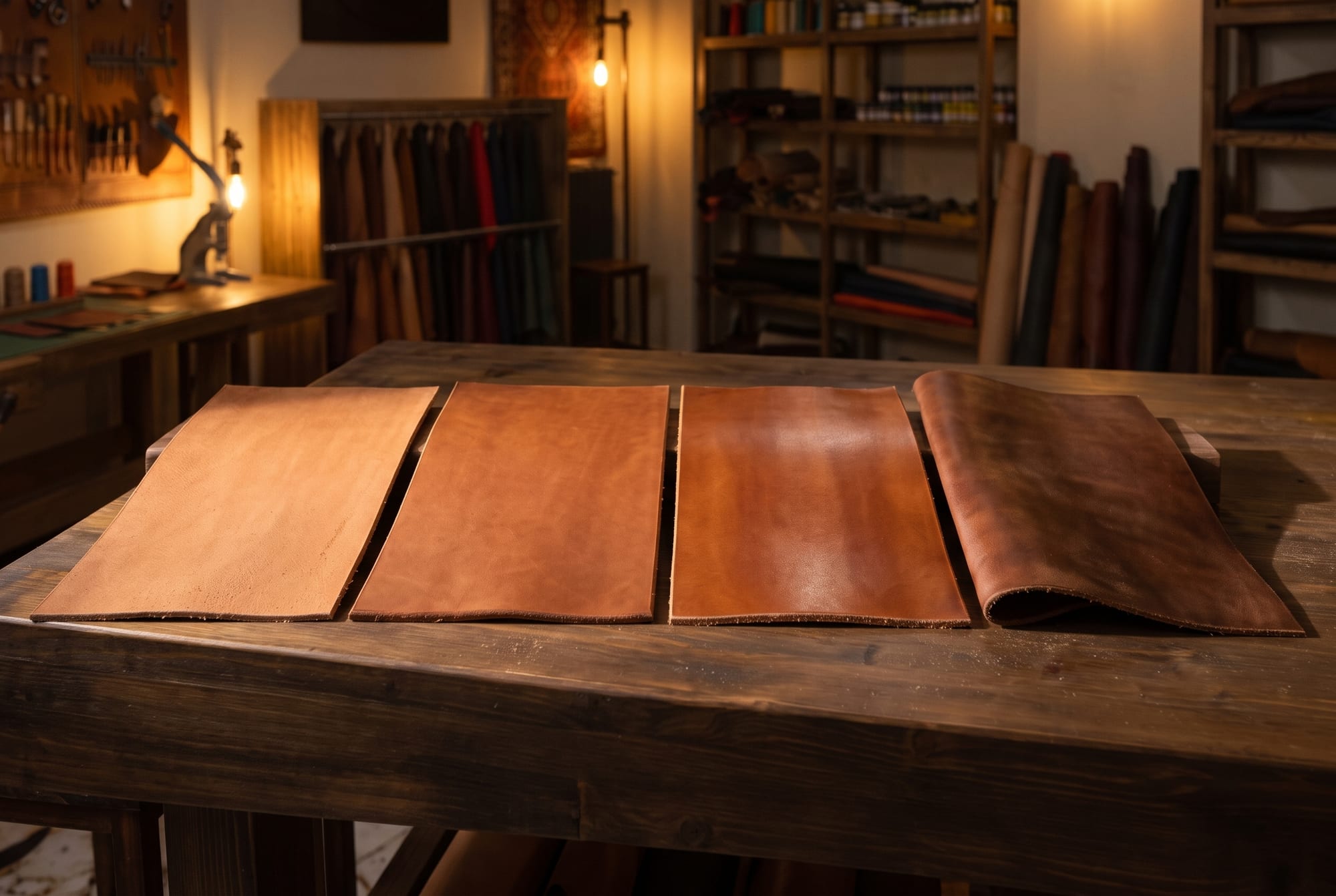
- Smooth vegetable-tanned, bare. Cream, twice a year at most. It will take whatever you give it, which is the risk.
- Waxed pull-up, such as Crazy Horse. It arrives with its own fat and wax and needs nothing for years. Marks come back with a warm thumb, and the routine is in Crazy Horse care. If it is a boot, a wax; if it is a bag, nothing.
- Buffed matte, such as Pueblo. Nothing at all in the first year. The dry surface is the finish, and cream applied early mats it permanently.
- Soft chrome-tanned and nappa. Cream, very sparingly. Most of these have a light surface finish, so a lot of what you apply will not go in and will simply sit there.
- Pigmented or coated. Nothing penetrates a topcoat, so a conditioner is a surface dressing at best. Clean it and leave it; and if it has started to flake, feeding it will not help, for the reasons in why leather peels. Not sure which of these you are holding? Start with aniline leather meaning and the one-drop water test.
- Suede and nubuck. No cream, no wax, no oil, ever. A brush, an eraser, and a spray protector if you want one.
- Patent and bonded. A damp cloth. There is nothing in either of them that can be fed.
How often, which is less often than you think
Twice a year is the ceiling for a piece in daily use, and many objects want less than that. A wallet carried in a trouser pocket gets hand grease and body warmth every day and may never need anything in its life. A bag that lives in a wardrobe nine months of the year needs a check at each changeover and probably nothing else.
The one season worth paying attention to is winter, and not for the reason people assume. The damage is not done by rain — it is done by heated indoor air, which is extremely dry, and by radiators. A piece that spends January next to a hot radiator will lose moisture faster than anything the weather can do to it, which is the argument in leather in winter. If you are going to cream something once a year, do it at the start of the heating season rather than in the spring.
What we use, and what we do not sell
We use a plain neutral cream on finished work, sparingly, and nothing else. No wax on anything that will be carried against clothing, no oil on anything that is not being rescued, and nothing at all on Pueblo or on our waxed hides.
We do not sell a care product, and that is deliberate rather than an oversight. The honest version of this advice is that most of our customers will spend nothing on leather care for the first several years of owning a piece, which is not a product line. If you want the single-page version of the whole routine it is in the care guide, and if something has gone wrong rather than gone dry, start instead with stain first aid — the first five minutes matter more than any tin.
Quick answers
- Is saddle soap a cleaner or a conditioner? A cleaner. It contains a little fat, but its function is to lift dirt and old dressings, and repeated use on clean leather leaves it drier.
- What is the difference between leather cream and leather conditioner? In practice, nothing reliable — the words are used interchangeably. Judge the product by whether it is an emulsion with water in it, which is controllable, or a straight fat or oil, which is not.
- Can I use neatsfoot oil on a bag? You can, and you will not get it out again. It is for rescuing desiccated leather, not for maintaining healthy leather.
- Does wax condition leather? No. It sits on top and blocks water. Useful on boots, wrong on a bag.
- How do I know if my leather is dry? Flex it. If the crease stands up when you let go, it is dry. If it relaxes into a soft curve, it is not, however dull it looks.
- How often should I condition leather? Twice a year at the very most, and many pieces need less. Once a year, at the start of the heating season, suits most things.
Further reading
- How to clean leather: the step everyone skips before conditioning
- Over-conditioned leather: the signs, and what comes back
- Olive oil, vaseline, baby wipes: what not to put on leather
- How to care for handmade leather: the complete guide
- Suede and nubuck care: why everything that feeds smooth leather ruins nap