Guide · 29 September 2026 · by Pınar
How to choose leather as a gift: two questions, and the pieces that answer both
Almost every leather gift guide is a list of objects. That is the least useful part. Leather has exactly two ways to go wrong when somebody else chooses it — and once you can see them, the list writes itself.
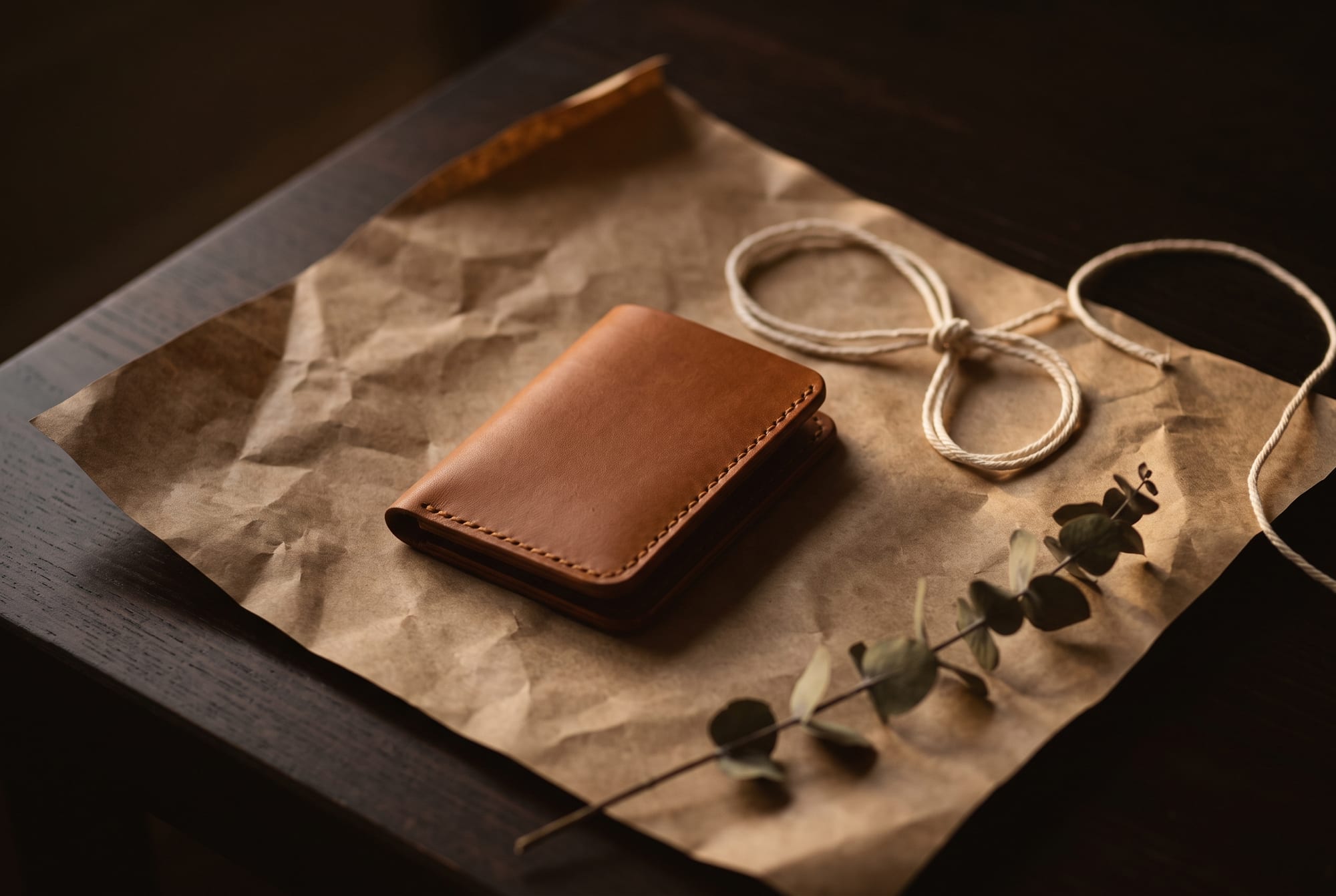
Somebody wrote to us last December with a question I have thought about ever since. She had bought her father a leather bag the previous year. He had thanked her warmly, put it on the shelf in its dust bag, and it was still there. She wanted to know what she had done wrong.
Nothing, exactly. She had bought a good object for a man who already owned a bag he liked, in a colour she would have chosen, in a shape that announced itself. Every individual decision was defensible. The gift still failed, because the question she asked herself — what is a nice leather gift? — is not the question that decides it.
There are two better questions, and neither of them has anything to do with how much you spend.
A leather gift is not finished when you give it
This is the thing that makes leather different from almost everything else you could wrap.
A ceramic bowl is finished. A bottle of wine is finished the moment it is opened. A piece of leather that has been made properly is, on the day it is handed over, at the least appealing point of its whole life. It is stiff. It is uniformly coloured. It has no marks. It smells of the tannery and behaves like a new shoe.
Everything people actually love about leather — the patina, the way a flap learns its own fold, the darkening exactly where a hand goes — is not in the box. It arrives later, and it arrives because of the recipient, not because of you.
You are not giving somebody an object. You are giving them the first year of one, and asking them to do the interesting part.
Which means a leather gift succeeds or fails on one thing above all others: whether it ends up in daily use. A beautiful piece that lives in a cupboard does not just fail to improve — it genuinely ages worse than one that gets carried, because nothing is polishing it and nothing is flexing it.
So the real design problem is not will they like it. It is will they use it by February.
Two questions decide it, and neither one is budget
Everything that stops a leather gift reaching daily use falls into one of two categories.
Question one: does it have to fit their body? A belt has a waist. A watch strap has a lug width in millimetres. A ring has a finger. Get these wrong and the piece is not merely imperfect, it is unusable — and, worse, the recipient now has to tell you.
Question two: does it have to match their taste? A bag is worn in public, in an outfit, in front of colleagues. It has to agree with how someone already dresses. A catchall bowl on a hall table does not have anything like the same burden.
Plot any leather object against those two axes and something obvious appears: there is a whole corner of the map where a piece is essentially impossible to get wrong.
Notice what the safe corner is not. It is not the cheap corner — a desk pad or a jewellery roll can cost more than a belt. It is the corner where the object adapts to the person rather than the person having to fit the object.
The safe corner, piece by piece
These are the categories that keep working regardless of how well you know somebody’s wardrobe.
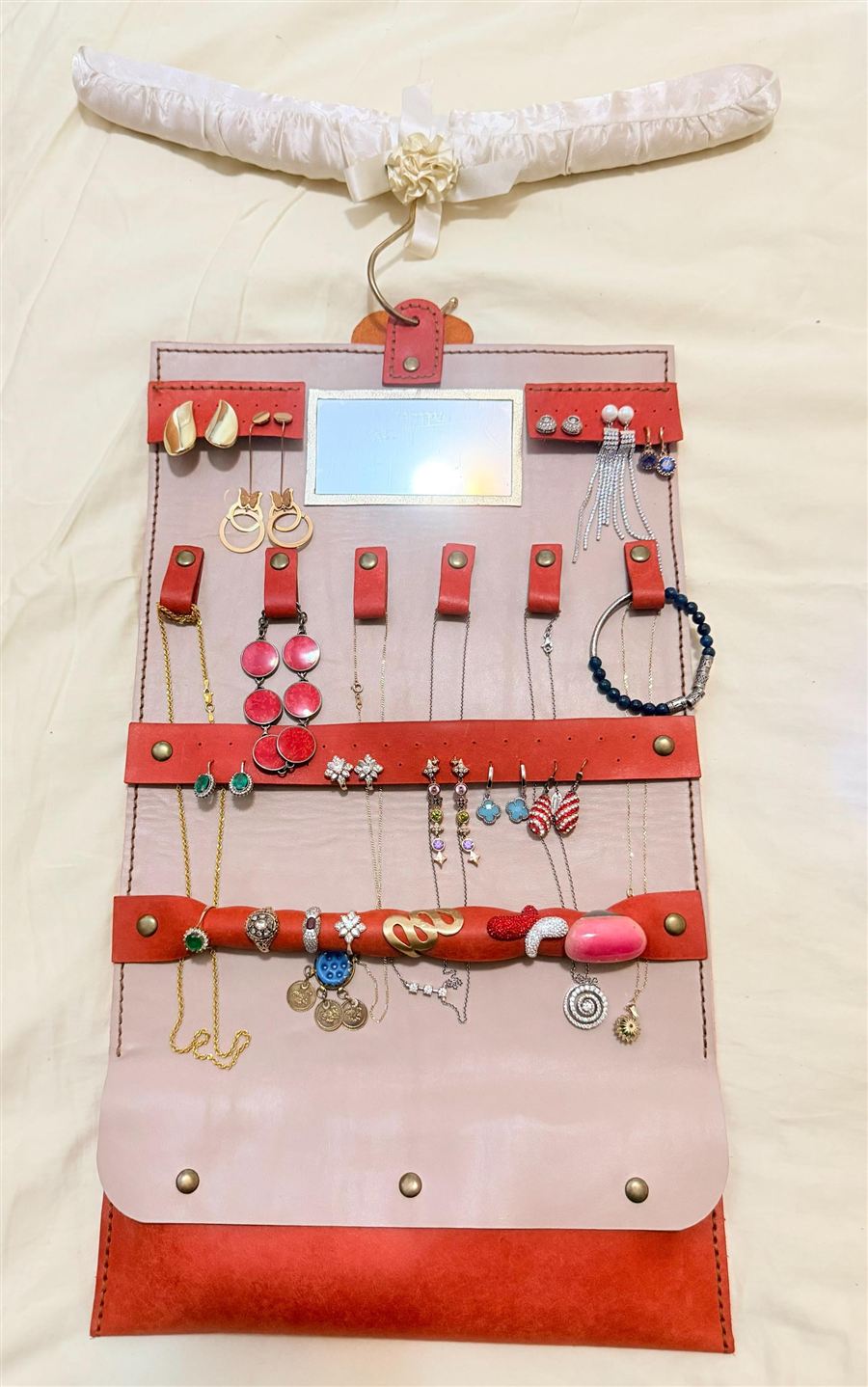
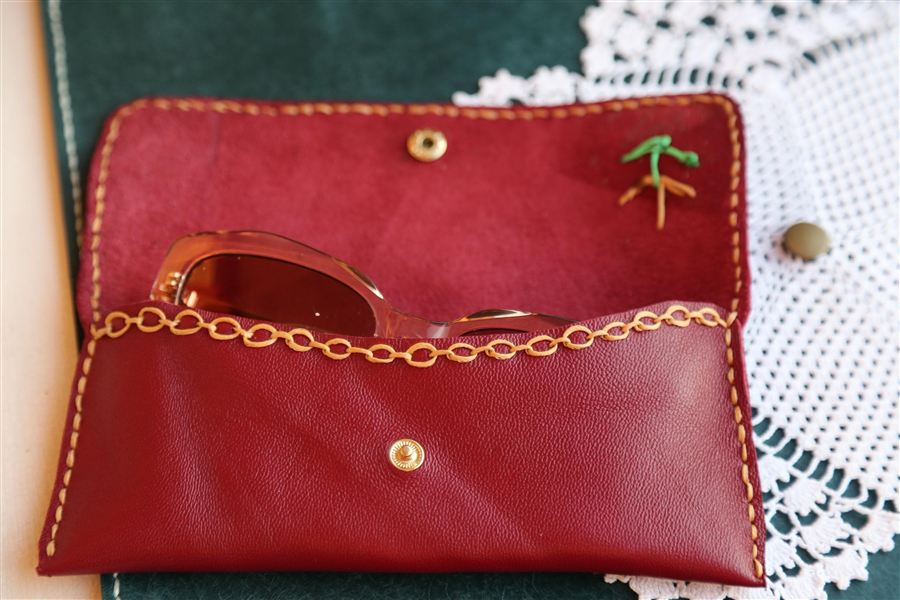
Things that hold other things. A jewellery roll, a tool roll, a glasses case, a cable pouch. They have no size relationship to a body, no strong visual presence in an outfit, and — the part that matters — they solve a problem the person already has. Nobody has to decide to like a jewellery roll. They just stop losing earrings.
Things that live on a surface, not a person. A catchall by the door, a desk pad, a set of placemats. These carry some taste risk — they are in someone’s home, and homes have opinions — but zero sizing risk, and they get used every single day without anybody deciding to use them.
Small carried things. A card wallet, a cardholder, a key case. The quiet advantage here is replacement: everyone already carries one, and everyone’s is worse than the one you are giving them. You are not asking them to adopt a new habit. You are upgrading an existing one.
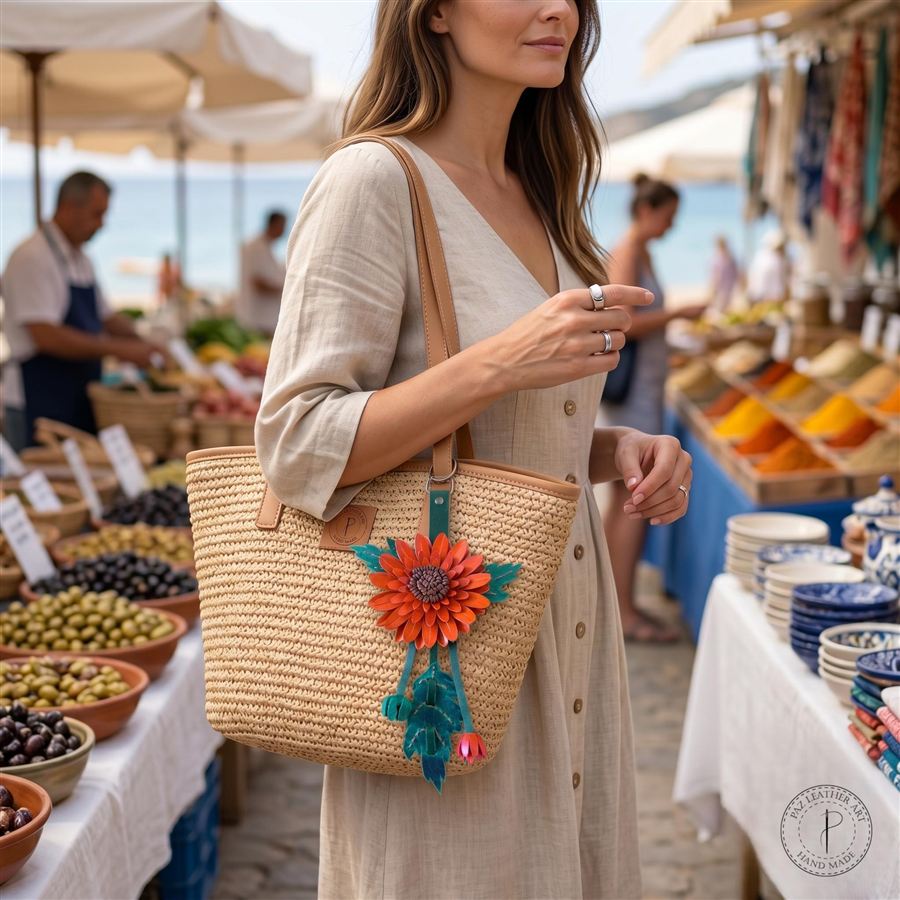
Things that attach to what they already own. A bag charm is the purest version of this idea. It does not replace anything, it does not have to match anything precisely, and it puts a piece of hand-made leather into daily circulation on a bag they already chose themselves.
The three to think twice about
I would rather say this plainly than sell you something that ends up in a cupboard.
A belt. It looks like the ideal gift and it is a measurement problem wearing a bow. Belt sizing is not trouser size, the buckle should land on the middle hole with room either side, and a belt that is wrong is wrong every single morning. If you are set on one, get the length from a belt they already wear — measured from the buckle’s fold to the hole they actually use, not end to end.
A bag. The gift my correspondent gave her father. Bags are worn in public, replace something that already exists, and carry the most taste risk of anything on the chart. They are wonderful gifts when you are buying for someone whose style you know intimately, and a gamble otherwise.
Anything in suede or nubuck. This one is about neither size nor taste. Nap needs a different routine from smooth leather, and giving somebody a maintenance obligation they did not ask for is a real cost. We have written the routine out, and it is not hard — but assume nothing about whether they want it.
A fourth, honestly: do not give leather to someone who does not want animal products. It is not a small preference and no amount of craft argument makes it a good surprise. The vegan leather question is genuinely complicated, but the gifting question is not.
The bad fortnight, and the note that prevents it
Here is the failure mode nobody warns about, and it has nothing to do with choosing the right object.
Two weeks after a leather gift is given, it is at its worst. It has not softened yet. It has picked up its first scratch, which the recipient did not expect and quietly panics about. It still does not fold where they want it to fold. If they do not know that this is normal, this is the fortnight in which they decide the piece is disappointing — and once something has been set aside, it very rarely comes back.
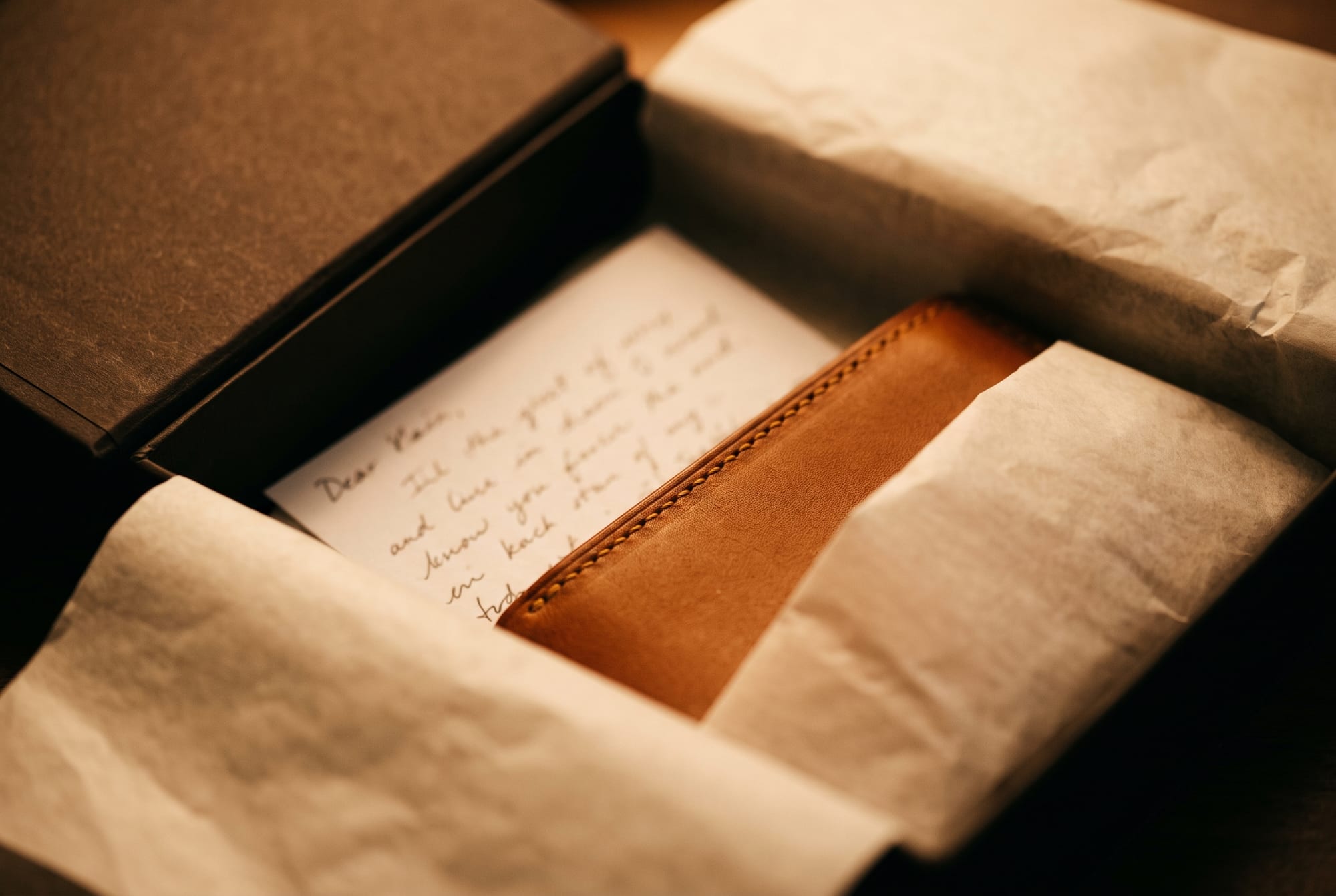
The cure costs nothing. Write three sentences and put them in the box. Tell them it will be stiff and that this is the hide, not a fault. Tell them the first scratch is coming and is supposed to. Tell them not to put anything on it yet — because the single most common way a new piece gets damaged is somebody helpfully oiling it in week three.
Give the object and the expectation together, or the object spends its first fortnight being judged against the wrong standard.
Colour, when you genuinely do not know
If you know their wardrobe, ignore this section entirely. If you are guessing, the risk is not choosing an ugly colour — it is choosing a colour with an opinion.
The reliable ground is mid-brown: cognac, tan, tobacco. It sits with black and with navy, it reads as warm rather than formal, and — the part people forget — it is the range that shows patina best, so the gift visibly improves rather than merely surviving.
Black is safe in a different way: it is safe because it is invisible. Nobody dislikes it and nobody remembers it, and it shows the least change over years.
Then there is burgundy and oxblood, which is the most interesting gift colour and the one that needs the most confidence, because it is unmistakably a choice. Give it to someone whose taste you know. And if you do give a new red piece, mention that it may transfer a little colour onto pale clothes in its first weeks — that is normal for freshly dyed leather and worth saying before it surprises them.
What I would avoid when guessing: anything with an initial stamped on it, unless you are certain. Personalisation is lovely when it is wanted and slightly imprisoning when it is not — a monogram makes a piece permanently unreturnable and un-regiftable, which is a lot to decide on somebody’s behalf.
Order earlier than feels necessary
The practical note, and the reason this article is published in September rather than December.
Hand-made work is not stock. A piece that is finished and on a shelf can ship quickly; a piece that has to be cut, stitched, edged and finished takes as long as it takes, and every maker’s queue in November is longer than their queue in October. Saddle stitching in particular is slow by design — that is the whole point of it — and it does not compress because a date is approaching.
So if you want something specific, or in a particular colour, or made to a size, ask the maker for their timeline before you decide rather than after. Anyone working by hand will tell you straight, and the answer in early autumn is almost always more relaxed than the answer six weeks later.
And if you have left it late: go back to the safe corner of the chart. The small carried things and the things that hold other things are exactly the pieces most likely to already exist, finished, today.
One last thing, which is the actual point
The father with the bag on the shelf did get a gift he used in the end. His daughter sent him a card wallet the following year. It cost a fraction of the bag. He used it the same week, because the thing it replaced was a falling-apart one he had been ignoring for five years, and there was no decision to make.
That is what a good leather gift does. It does not ask the recipient to become a slightly different person with slightly different taste. It slips into something they already do, every day, and then spends a decade quietly getting better at it.
The best leather gift is not the most impressive one. It is the one that is in use by February.
Further reading
- The leather anniversary gift guide: why year three, and what to choose
- What patina actually means, and how to tell it from damage
- How to soften stiff leather without ruining it
- Olive oil, Vaseline, baby wipes: what not to put on leather
- How to buy leather accessories: the sixty-second inspection
- Burgundy and oxblood leather: the colour guide
- The leather desk pad: what size to buy, and what it becomes in five years
- Glossary: crocking (dye transfer)